When your AC is running but the house still feels warm, it is frustrating and in South Florida, it can become uncomfortable quickly. You hear the system running. You may feel air coming from the vents. The thermostat is calling for cooling. But the temperature still will not drop the way it should.
That does not always mean the entire system has failed. Sometimes the cause is simple, like a clogged air filter, blocked return vent, or thermostat setting. Other times, the issue needs a trained HVAC technician, especially when refrigerant, electrical components, frozen coils, or deeper airflow problems are involved.
Here is a practical way to think through the problem: what you can safely check first, what the symptoms may point to, and when it is time to call Tri-County HVAC for professional AC repair.
Table Of Contents
Your Air Filter May Be Clogged
Start with the air filter. It is one of the easiest things to check, and it can make a bigger difference than people expect. If the filter is packed with dust, pet hair, or debris, your system may not be able to move enough air across the coil and through your home.
That reduced airflow can lead to:
- weak air from the vents
- uneven cooling from room to room
- longer run times
- higher indoor humidity
- ice forming on the indoor coil
- extra strain on the system
In South Florida, AC systems often run for long hours during hot months, so filters can get dirty faster than homeowners expect. If your filter looks clogged, replace it with the correct size and type for your system. If cooling does not improve after the system has time to run, there may be another issue that needs professional attention.
Regular filter changes are also one reason routine AC maintenance matters. Maintenance helps keep the system cleaner, easier to inspect, and more prepared for heavy cooling demand.
If you are replacing filters frequently and the home still feels warm, pay attention to the pattern. Is every room uncomfortable, or only one side of the house? Whole-home weak airflow may point toward the equipment. One or two stubborn rooms may suggest duct, vent, insulation, or balancing issues.
The Thermostat May Be Set Incorrectly
It sounds basic, but thermostat issues are worth ruling out before assuming the AC itself has a major problem.
Make sure:
- the system is set to
cool
- the temperature is set lower than the current indoor temperature
- the fan is not set to
on when you expect active cooling
- the thermostat has working batteries, if battery-powered
- the schedule has not changed unexpectedly
If the fan is set to on, the blower may continue moving air even when the outdoor unit is not actively cooling. That can make it feel like the AC is running but not cooling. Setting the fan to auto may help the system run more normally.
If the thermostat screen is blank, inaccurate, or not communicating with the system, it is better not to guess. A technician can check whether the issue is with the thermostat, wiring, control board, or another component.
The Outdoor Unit May Be Dirty Or Blocked
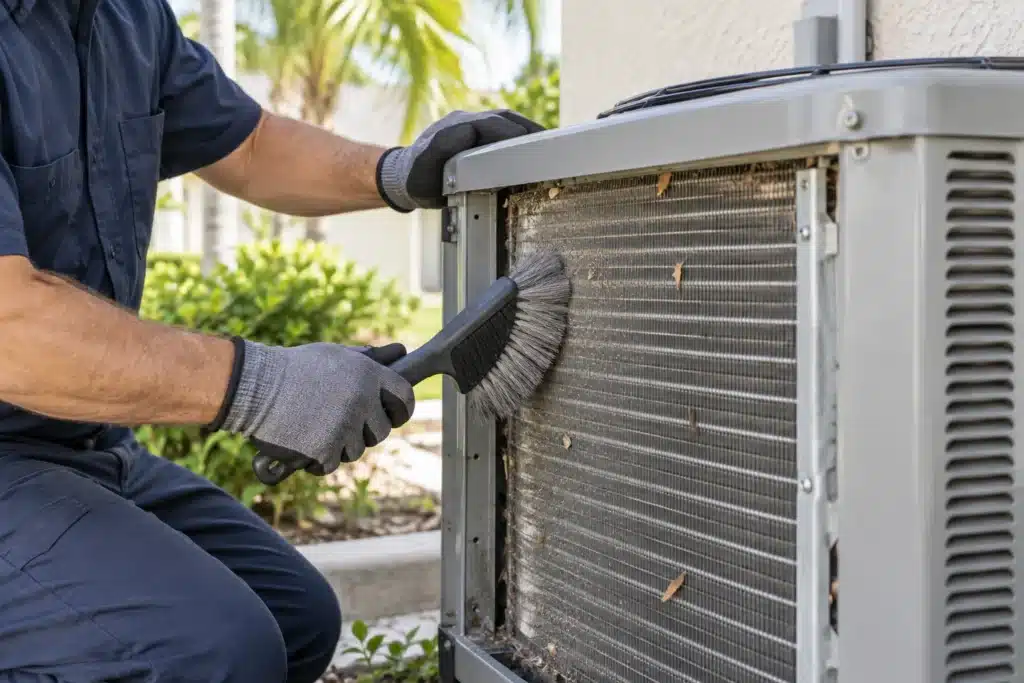
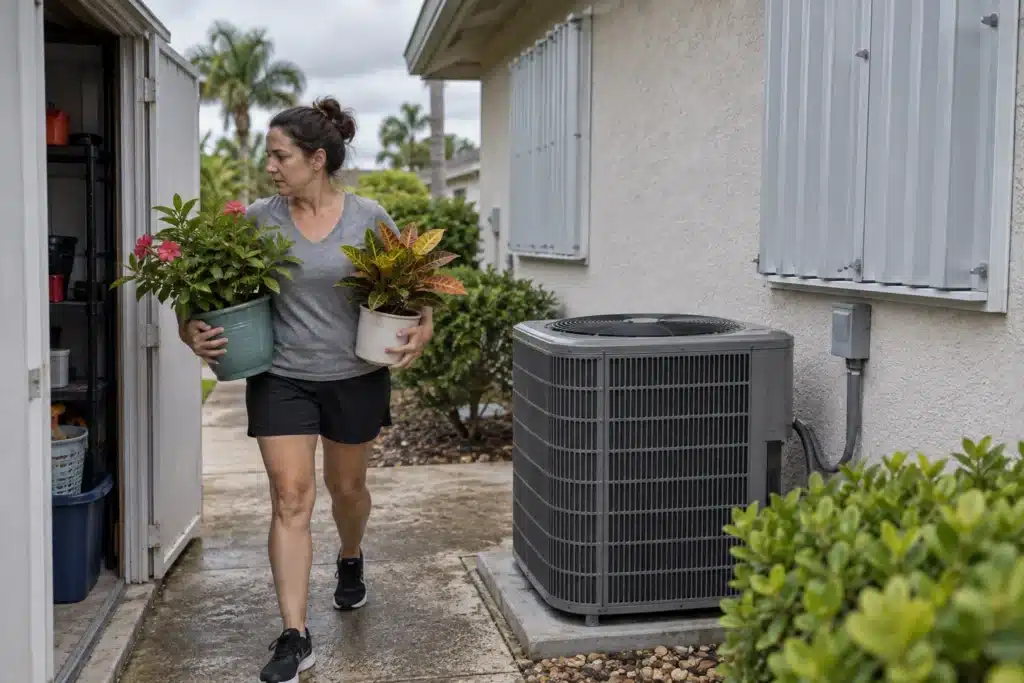
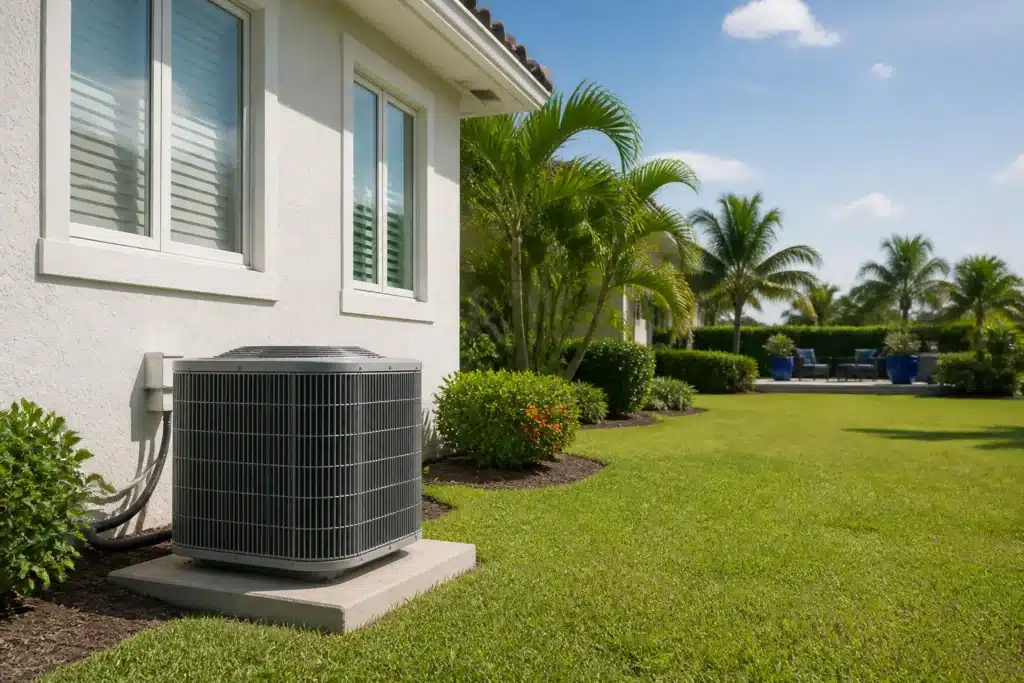
Your outdoor condenser unit needs open airflow to release heat from inside your home. If the outdoor unit is blocked by leaves, dirt, grass clippings, or overgrown landscaping, the system may struggle to cool properly.
Walk outside and look around the unit. If it is safe to do so, clear away loose debris around the equipment. Keep plants, storage items, and yard debris away from the sides of the unit so air can move freely. Simple clearance can help, but avoid taking the unit apart.
Do not open panels or spray electrical components. If the coil is heavily dirty, damaged, or blocked inside the unit, schedule service. A technician can inspect and clean the equipment properly without damaging fins, wiring, or other parts.
Outdoor units in South Florida can collect leaves, grass clippings, dust, and storm debris throughout the year. Even when the system is still running, restricted outdoor airflow can make it harder for the AC to release heat, which may leave the indoor air warmer than expected.
The Evaporator Coil May Be Frozen
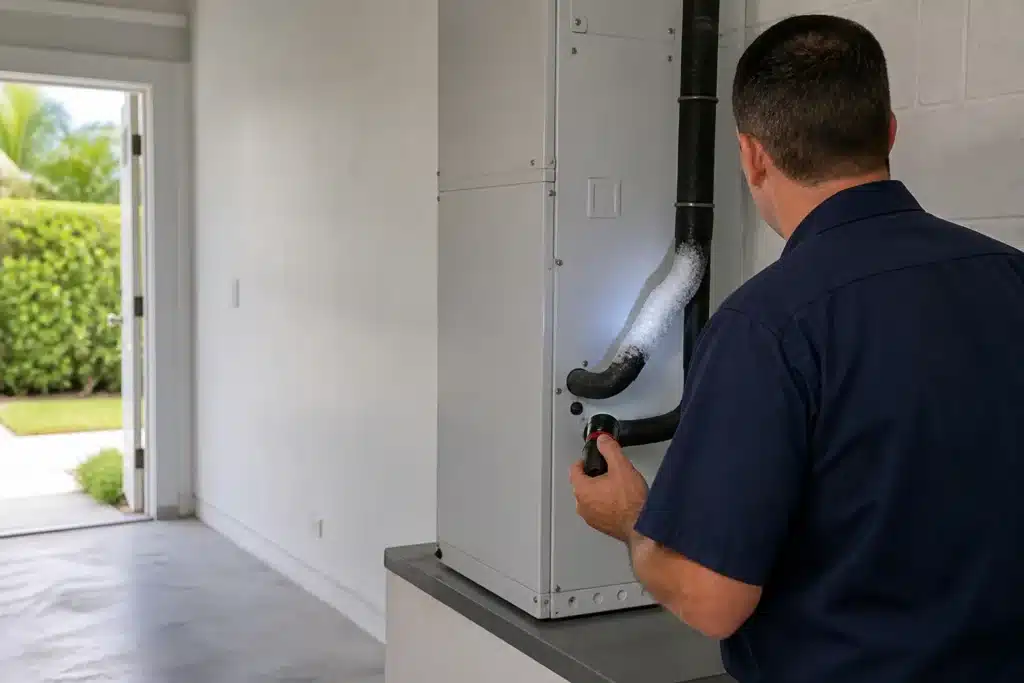
A frozen indoor coil can make an AC run without cooling the home. In some cases, you may notice weak airflow, ice on refrigerant lines, water near the indoor unit, or the system running for a long time without lowering the temperature.
A coil can freeze because of issues such as:
- restricted airflow
- dirty filters
- blocked return air
- low refrigerant
- blower problems
- dirty coils
If you see ice, do not keep forcing the system to run normally. That can feel counterintuitive when the house is warm, but continuing to run a frozen AC can make the problem worse. Turn the system off and call for service, especially if the ice returns after thawing.
A technician can determine whether the freeze-up came from airflow restriction, refrigerant issues, or another mechanical problem.
The System May Be Low On Refrigerant
Low refrigerant can prevent your AC from removing heat the way it should. When that happens, the system may still run, but it can struggle to cool, blow warmer air, freeze the coil, or run much longer than usual.
Refrigerant is not something that gets used up like fuel. If the system is low, there may be a leak or another issue that needs professional diagnosis. This is not a DIY repair.
Call an HVAC technician if you notice:
- warm air from the vents
- hissing or bubbling sounds
- ice on the refrigerant line
- poor cooling even with a clean filter
- repeated cooling problems after prior service
Tri-County HVAC can inspect the system and help identify whether refrigerant, airflow, electrical controls, or another issue is affecting performance.
It is also important not to keep adding refrigerant without understanding why the level is low. A proper diagnosis helps determine whether the system has a leak, whether a repair is practical, or whether the equipment is showing signs of a larger performance problem. That transparency matters, because the right next step depends on the actual cause.
Airflow Problems Could Be Coming From The Ductwork
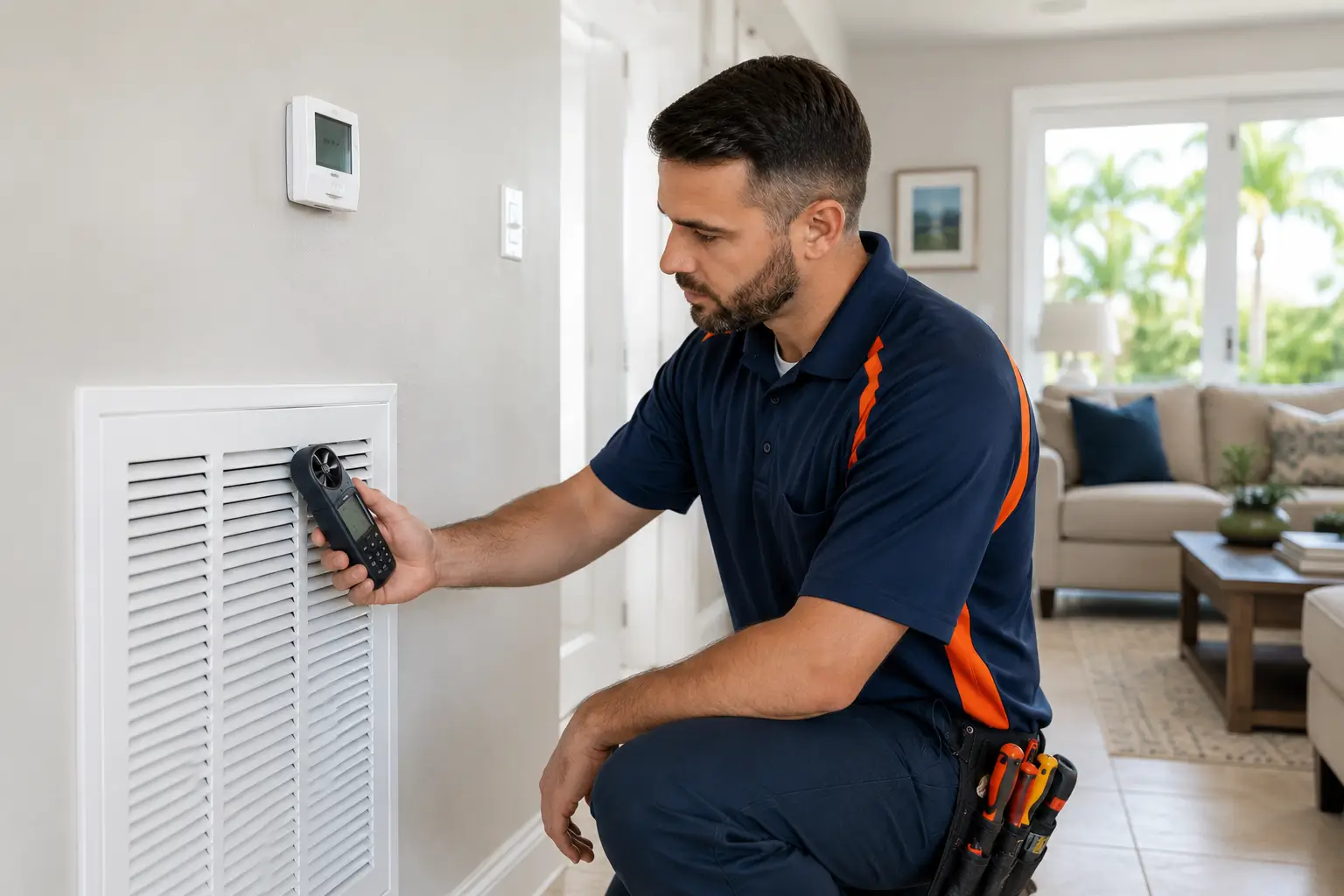
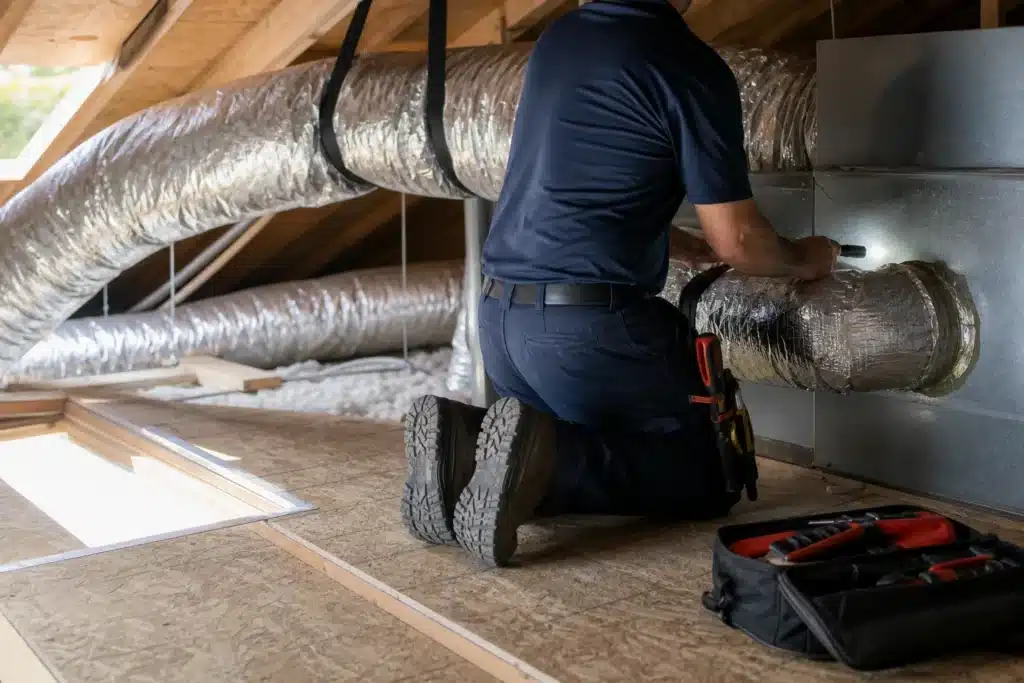
Sometimes the AC equipment is doing part of its job, but the cooled air is not moving through the home correctly. That is where ductwork comes in. Duct problems can make certain rooms feel warm, reduce airflow, and cause the system to work harder than it should.
Possible duct-related issues include:
- disconnected duct sections
- crushed or damaged ducts
- air leaks
- poorly insulated ductwork
- blocked supply or return paths
- old ductwork that no longer supports the home well
If some rooms cool normally while others stay hot, or if airflow feels weak even after replacing the filter, ductwork may be part of the problem. Tri-County HVAC offers ductwork replacement services when damaged or inefficient ductwork is affecting comfort.
Duct issues can be easy to overlook because the AC may sound normal at the thermostat or indoor unit. But if cooled air is escaping into an attic, garage, crawl space, or wall cavity before it reaches the rooms you use most, the system can run longer while comfort stays uneven. A duct inspection can help separate equipment problems from delivery problems.
Your AC May Be Struggling With South Florida Heat And Humidity
South Florida cooling demand is different from many other parts of the country. AC systems often have to manage high outdoor temperatures, long run times, heavy humidity, and warm nights where the equipment gets very little relief.
If your AC is older, undersized, poorly maintained, or already dealing with airflow problems, it may have trouble keeping up during peak heat. You may notice:
- the system runs almost constantly
- the home feels humid even when the AC is on
- cooling is uneven
- the thermostat takes too long to satisfy
- energy bills rise while comfort drops
A technician can evaluate whether the system needs repair, cleaning, maintenance, duct improvements, or a larger conversation about system performance.
Humidity is another reason a home can feel uncomfortable even when the thermostat is close to the set temperature. If the AC is not running long enough, moving enough air, or removing moisture properly, rooms can feel sticky, heavy, or warmer than the number on the thermostat suggests. In other words, comfort is not only about the temperature reading.
When To Call A Professional For AC Repair
Some basic checks are safe for homeowners: thermostat settings, filter condition, blocked vents, and visible debris around the outdoor unit. Those steps can rule out simple causes. But many cooling problems need professional diagnosis.
Call Tri-County HVAC if:
- your AC is blowing warm air
- airflow is weak throughout the home
- the system keeps running but does not cool
- the indoor coil or refrigerant line freezes
- breakers trip or electrical issues appear
- you hear unusual noises
- the same problem keeps coming back
- your home stays humid and uncomfortable
If your system keeps running without cooling the home, Tri-County HVAC can inspect the equipment, explain what is happening in plain language, and recommend the right next step. For professional AC repair in Loxahatchee, Palm Beach County, and surrounding South Florida communities, call (561) 281-8074 or reach out through the contact page.
When you call, it helps to share what you have noticed: whether the air is warm or just weak, whether one room is worse than the others, whether the outdoor unit is running, and whether the problem started suddenly or has been getting worse over time. Those details can help the technician narrow down the most likely causes during the visit.
If the system has had repeated cooling problems, mention any recent repairs, filter changes, thermostat changes, or unusual sounds. A clear timeline can make it easier to connect symptoms and avoid treating the same comfort problem as a brand-new issue each time.
FAQ
Why Is My AC Running But Blowing Warm Air?
Your AC may be blowing warm air because of restricted airflow, a dirty filter, a frozen coil, low refrigerant, thermostat issues, outdoor unit problems, or an electrical/mechanical fault. If simple checks do not solve it, schedule professional AC repair rather than continuing to run the system and hope it catches up.
Should I Turn Off My AC If It Is Not Cooling?
If the system is blowing warm air, frozen, making unusual noises, or running constantly without cooling, turning it off can help prevent additional strain while you wait for service. If you see ice, let the system thaw and call a technician.
Can A Dirty Filter Make My AC Stop Cooling?
Yes. A clogged filter can reduce airflow, make the system work harder, and contribute to frozen coils or weak cooling. Replace the filter if it is dirty, then monitor whether cooling improves. If the problem continues, there may be another issue.
How Do I Know If Low Refrigerant Is The Problem?
Possible signs include warm air, ice on the refrigerant line, hissing sounds, long run times, and poor cooling even with a clean filter. Refrigerant issues require professional service because low refrigerant may point to a leak.
When Should I Call An HVAC Technician?
Call a technician when basic checks do not restore cooling, when the system freezes, when airflow is weak, when electrical issues appear, or when the AC keeps running but your home stays warm. A professional can inspect the full system and identify the real cause.
Need Help With An AC That Is Running But Not Cooling?
If your AC is running but your South Florida home still feels hot or humid, Tri-County HVAC can help diagnose the issue and recommend the right next step. Call (561) 281-8074 or contact the team online to schedule AC service.