A cooling problem in a commercial building can affect more than the thermostat. Employees may struggle to stay comfortable, customers may spend less time inside, humidity can become harder to control, and temperature-sensitive equipment or inventory may need extra attention. In South Florida, where air conditioning systems often operate for long stretches, a small performance issue can become a noticeable business disruption.
That is why HVAC Maintenance should be treated as part of normal facility planning. A planned visit gives a technician an opportunity to review how the equipment is operating, look for developing concerns, and explain which items need attention. It does not prevent every breakdown, but it can make system care more organized and help a business respond before certain problems become urgent.
The right maintenance approach depends on the building, equipment, occupancy, operating hours, and cooling demands. This guide explains what commercial maintenance may include, which warning signs deserve attention, and how business owners and property managers can plan service with less disruption.
Table Of Contents
What Commercial HVAC Maintenance Includes
Commercial HVAC systems vary widely. A small professional office may use equipment similar to a residential split system, while a retail space, restaurant, warehouse, or multi-tenant property may have rooftop units, multiple thermostats, larger duct systems, or controls that serve different zones. Because of those differences, a maintenance visit should be based on the actual equipment and the way the building is used.
In general, a technician may inspect system operation, airflow, electrical components, drainage, coils, filters, controls, and visible equipment condition. The visit can also include cleaning or adjustments that are appropriate for the system. If something looks worn, damaged, blocked, loose, or outside the expected operating range, the technician can explain whether it needs monitoring, maintenance, or a separate repair.
Airflow And Filter Condition
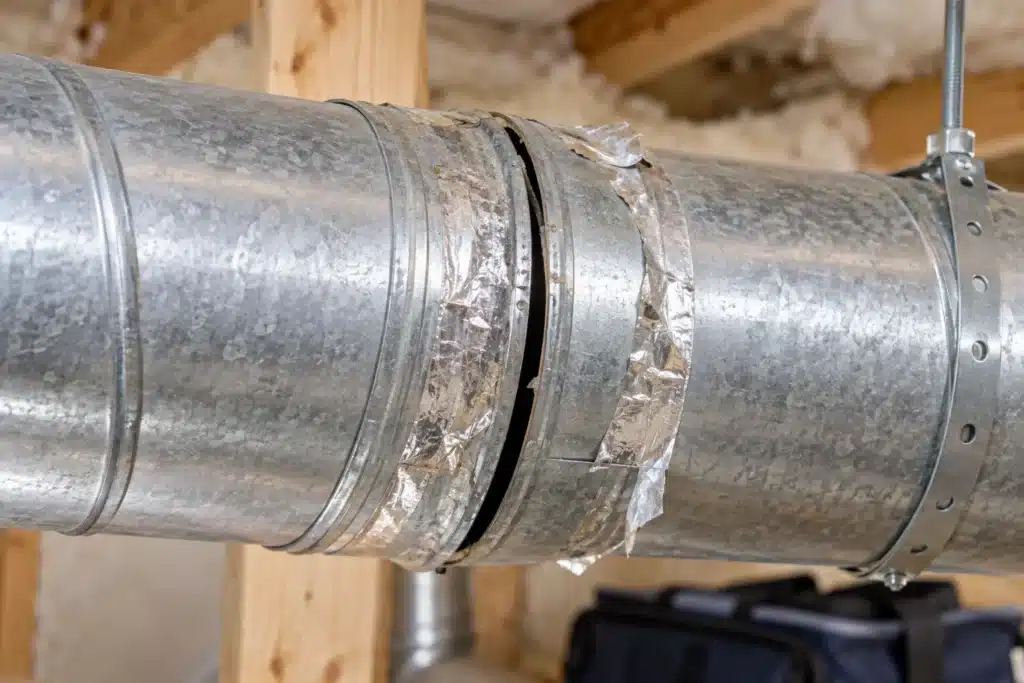
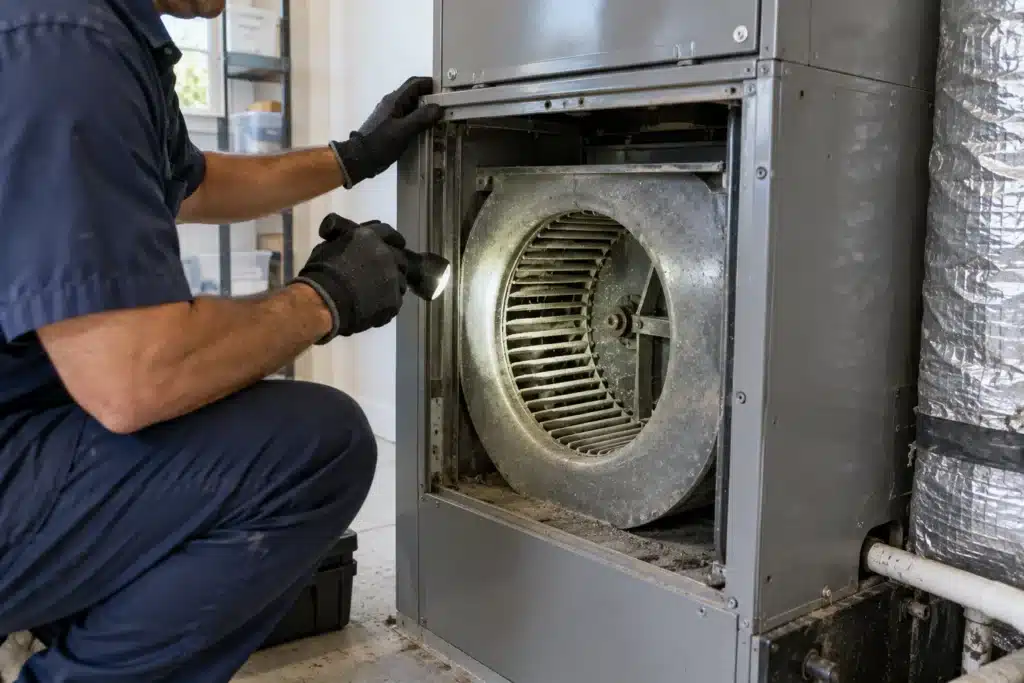
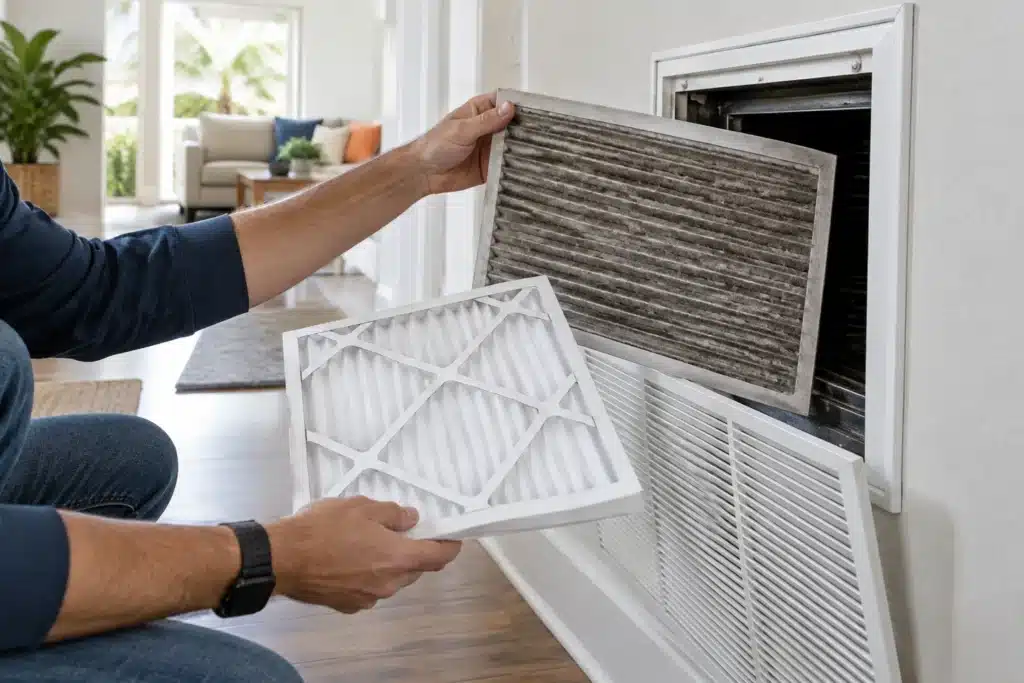
Restricted airflow can make comfort problems more noticeable and may place additional strain on equipment. Filters need to match the system, and their replacement schedule can depend on occupancy, dust, operating hours, renovation activity, and the type of business. A technician can also look beyond the filter for blocked returns, dirty components, closed dampers, or duct concerns.
Coils, Drainage, And Moisture
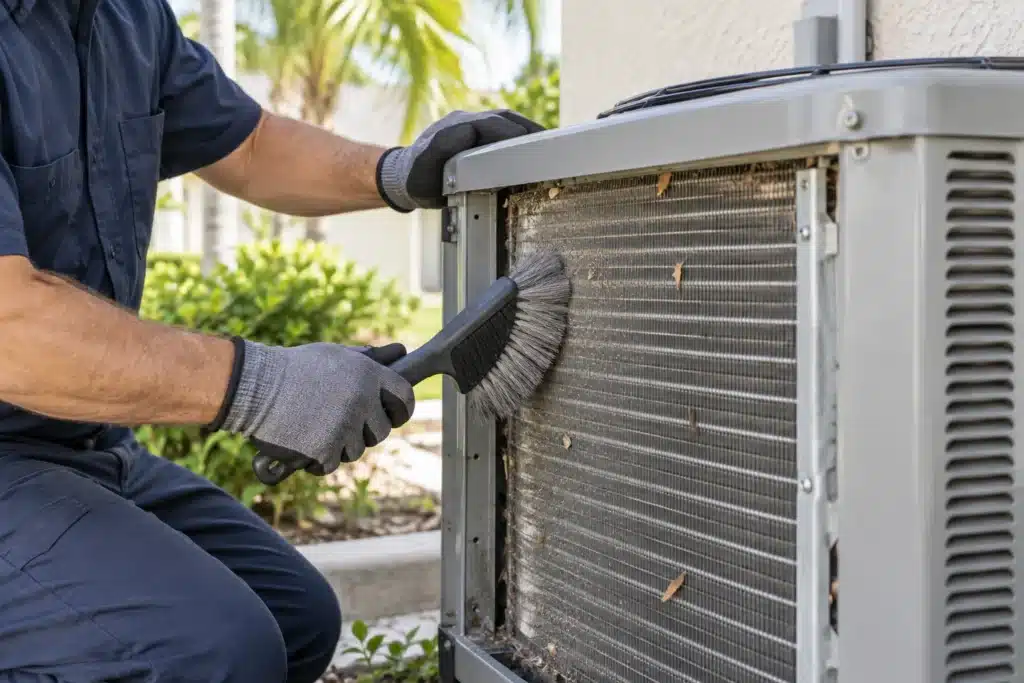
Cooling equipment removes moisture as it operates. In a humid climate, drainage components need to move that water away reliably. Maintenance may include checking accessible drain pans and condensate lines, reviewing coil condition, and looking for signs of water where it should not be. Recurring moisture problems can require a closer inspection instead of repeated surface-level cleanup.
Controls And Electrical Components
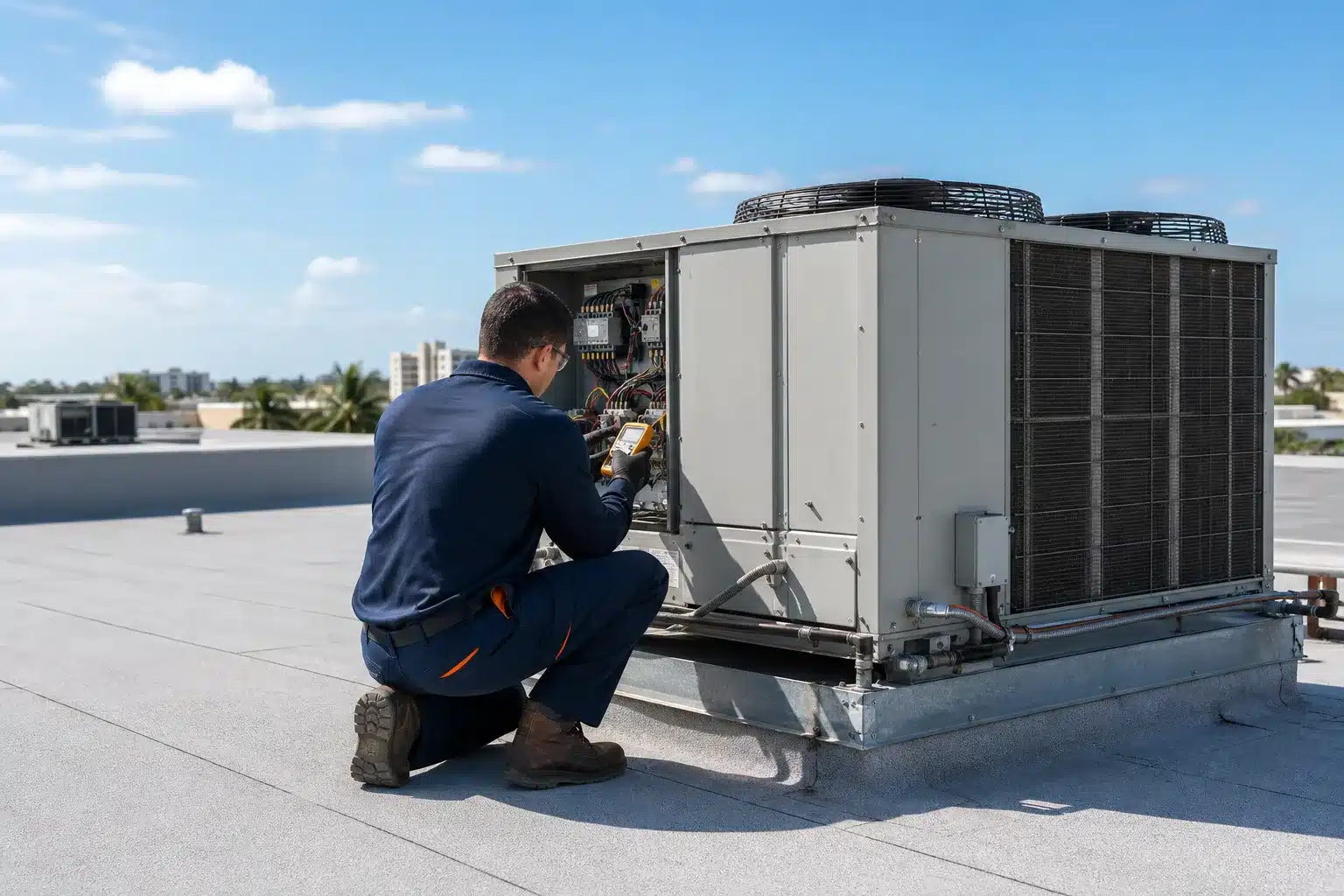
Thermostats, sensors, relays, wiring, and other controls help the system respond to changing building conditions. A visual and operational check may identify loose connections, unusual cycling, inconsistent settings, or controls that are not responding as expected. Electrical testing and internal equipment work should be handled by a qualified professional.
Why Consistent Maintenance Matters In South Florida
Commercial cooling systems in Palm Beach County often work through high temperatures, heavy humidity, sudden rain, and long periods of daily use. Outdoor equipment may also be exposed to sun, airborne debris, landscaping material, and coastal conditions depending on the property. Those factors do not guarantee a problem, but they can increase the importance of consistent observation and care.
Commercial buildings also have changing internal loads. A busy dining room, a retail rush, heat-producing equipment, open exterior doors, or a full meeting space can change how much cooling the building needs. If airflow is already weak or a component is beginning to fail, the problem may become obvious only during the busiest part of the day.
Planned service creates a record of what technicians observe over time. That history can help a property manager notice recurring drainage concerns, repeated component issues, changing temperature patterns, or equipment that needs more frequent attention. It also makes it easier to discuss repair and replacement decisions using actual service information instead of relying only on memory after a breakdown.
Warning Signs That Should Not Wait
Not every comfort complaint means the equipment is failing, but certain changes deserve prompt attention. Waiting can make it harder to determine whether the issue is a setting, an airflow problem, a maintenance need, or a repair concern.
- Some rooms or zones stay warmer than others during normal operating hours.
- The system runs much longer than usual without reaching the set temperature.
- Airflow from supply vents feels noticeably weaker.
- Employees or customers report new hot, cold, or humid areas.
- Water appears near indoor equipment, ceiling areas, or drain components.
- The system starts and stops frequently or does not follow normal schedules.
- Energy use changes sharply without a clear change in weather, hours, or occupancy.
- Equipment begins making new rattling, grinding, buzzing, or squealing sounds.
- Burning odors, repeated breaker trips, or electrical concerns appear.
Active leaks, burning odors, sparking, repeated breaker trips, or equipment that appears unsafe should not be treated as routine maintenance items. Turn the affected system off when it is safe to do so, keep people away from the area, and arrange for professional AC repair. Do not remove panels or attempt electrical repairs inside commercial equipment.
A Practical Commercial HVAC Maintenance Checklist
A useful checklist keeps responsibilities clear without asking employees to diagnose equipment. The goal is to notice changes, preserve access, and give the service team accurate information.
Between Professional Visits
- Record comfort complaints: Note the date, time, zone, thermostat reading, weather, and business activity when a problem occurs.
- Keep equipment areas accessible: Do not stack boxes, supplies, or furniture around indoor units, returns, thermostats, or service access points.
- Watch visible drainage areas: Report standing water, stains, dripping, or recurring musty odors instead of assuming they will clear on their own.
- Check for blocked vents: Make sure displays, shelving, partitions, and furniture are not covering supply or return openings.
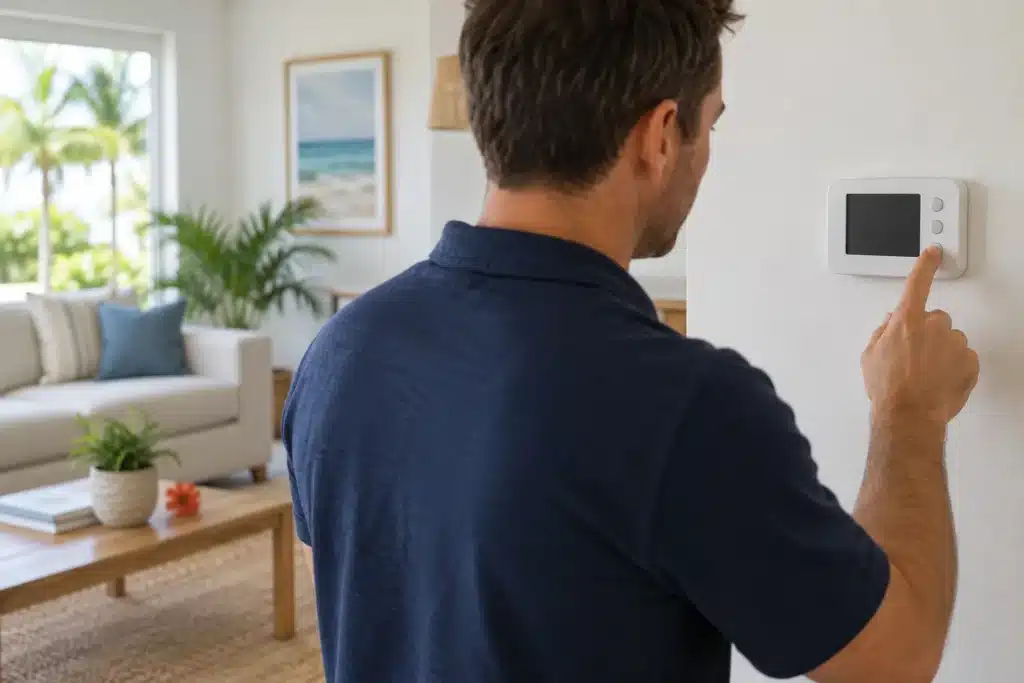
- Review thermostat schedules: Confirm that occupied and unoccupied settings still match current business hours.
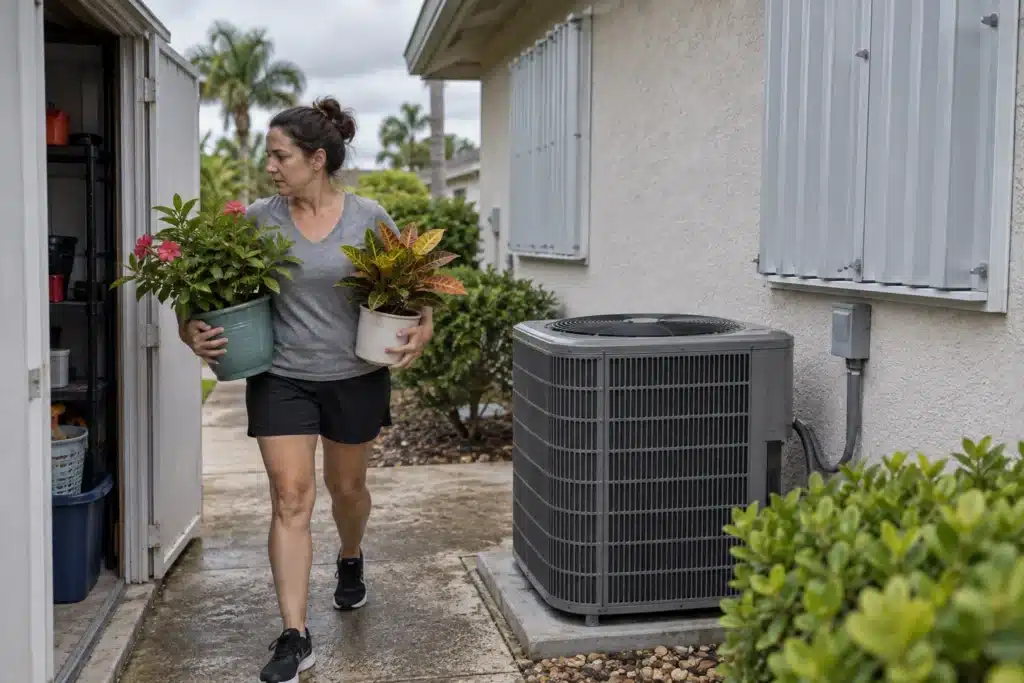
- Protect outdoor clearance: Keep landscaping, trash, and stored materials away from accessible outdoor equipment without entering restricted areas.
- Track unusual sounds or cycling: A short video or written description can help a technician understand an intermittent problem.
- Assign one point of contact: Choose the person who can explain building access, recent complaints, schedules, and prior service history.
During A Professional Maintenance Visit
Ask the technician to explain what was inspected, what was cleaned or adjusted, and whether anything should be watched before the next visit. Keep the service report with other facility records. If a repair is recommended, request a plain-language explanation of the concern, its urgency, and how it affects operation.
The scope should match the equipment. A rooftop unit may require different access and safety planning than an indoor split system. A property with several zones may also need more time to evaluate temperature differences and control behavior. Tri-County HVAC's preventative AC maintenance service can be discussed in the context of the building rather than treated as a one-size-fits-all checklist.
How To Plan Service Around Business Operations
Maintenance is easier when the HVAC company understands the building before the appointment. Share normal business hours, busy periods, security requirements, roof-access rules, tenant contacts, and any area that cannot be interrupted without notice. If equipment serves a kitchen, computer room, medical office, retail floor, or other sensitive space, explain that during scheduling.
It also helps to gather recent service records, equipment information, thermostat schedules, and a list of recurring complaints. A note that says "the west office gets warm after 3 p.m." is more useful than a general statement that the building is uncomfortable. Details help the technician focus the inspection without assuming the cause.
For multi-tenant properties, ask tenants to send concerns through one contact when possible. That reduces duplicate messages and makes it easier to see whether several complaints point to the same zone or operating period. After service, communicate any temporary setting changes or follow-up work so staff know what to expect.
How Often Commercial Equipment Should Be Evaluated
There is no single maintenance schedule that fits every commercial system. Equipment type, manufacturer guidance, operating hours, occupancy, indoor activities, filter requirements, building age, and service history all matter. A system that runs nearly continuously in a busy South Florida business may need a different plan than equipment serving a lightly used office.
A technician can help set an appropriate schedule after reviewing the equipment and how the property operates. The schedule may also change when a building adds tenants, extends its hours, completes renovations, or begins using heat-producing equipment. The practical goal is consistency: know who is responsible, what is being checked, and when the next evaluation should occur.
When The System May Need More Than Maintenance
Maintenance supports routine care, but it is not a substitute for repairing a failed or unsafe component. If the equipment cannot maintain temperature, leaks water, trips electrical protection, makes severe mechanical noises, freezes, or stops operating, the technician may need to diagnose a specific problem.
Recurring issues deserve attention as well. Replacing a filter or clearing a drain may address an immediate symptom, but repeated trouble can point to airflow, drainage, control, installation, or equipment concerns that require a broader evaluation. The same is true when one zone never becomes comfortable despite repeated thermostat adjustments.
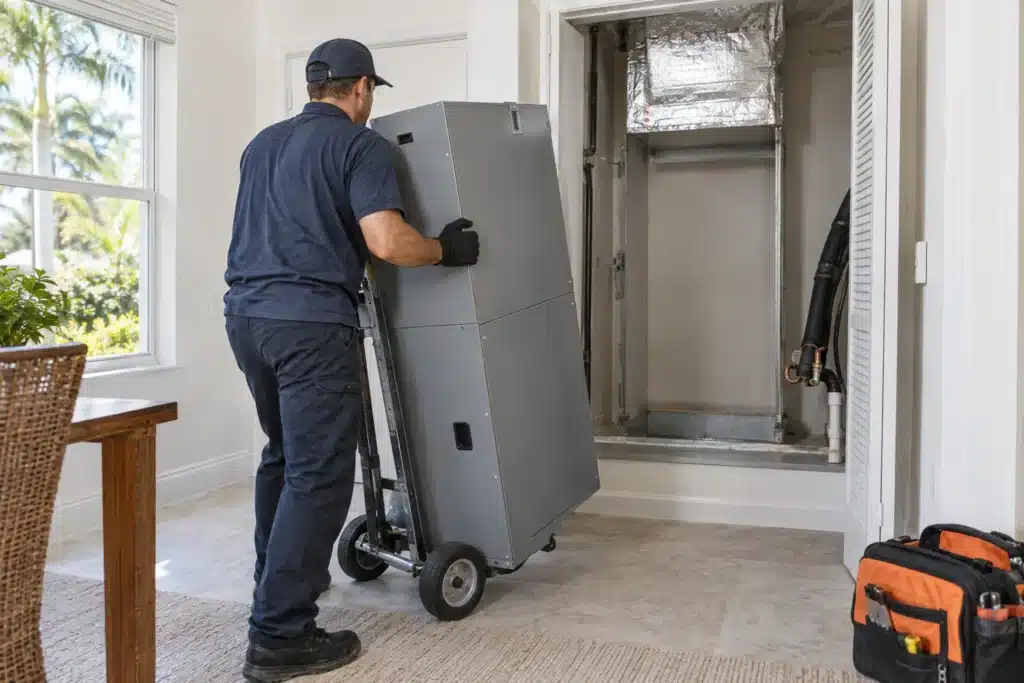
If the system is older or has a growing repair history, service records can support a more informed conversation about continued repair versus future replacement. The right choice depends on the actual condition of the equipment and the needs of the property. Tri-County HVAC offers a range of commercial and residential HVAC services that can be matched to the problem found during inspection.
Frequently Asked Questions
Can Commercial HVAC Maintenance Prevent Every Breakdown?
No. Parts can still fail, electrical problems can develop, and unexpected damage can occur. Maintenance can help technicians identify certain developing concerns and keep routine care organized, but it should not be described as a guarantee against downtime.
Should Employees Change Commercial HVAC Filters?
That depends on the equipment, access, company policy, and the employee's training. Some filters are easy to reach, while others are inside restricted equipment or rooftop units. If access is unclear, ask the HVAC provider to handle the filter and explain the appropriate replacement plan.
Why Does One Commercial Zone Stay Hotter Than The Others?
The cause could involve thermostat location, occupancy, sunlight, blocked vents, airflow balance, ductwork, controls, equipment performance, or another building condition. A technician may need to compare the zones and inspect the system before identifying the reason.
Is A Sudden Increase In Energy Use Always An HVAC Problem?
No. Weather, longer operating hours, new equipment, occupancy changes, and utility rates can all affect energy use. If the change appears alongside longer run times, comfort problems, or unusual cycling, an HVAC inspection may be a useful part of the review.
What Information Should I Provide When Scheduling Service?
Share the property address, business hours, equipment location, access instructions, affected zones, recent symptoms, and any safety or security requirements. If you have previous service records or equipment details, keep them available for the technician.
Build A Maintenance Plan Around Your Business
Commercial HVAC care works best when it reflects the building, the equipment, and the way people use the space. A clear plan can make maintenance easier to schedule, improve communication, and help decision-makers respond to developing concerns before comfort problems interrupt a busy day.
For commercial HVAC service in Palm Beach County and surrounding South Florida communities, call Tri-County HVAC at (561) 281-8074, use the contact page, or schedule a service call online. The team can review your equipment and help you determine the appropriate next step.