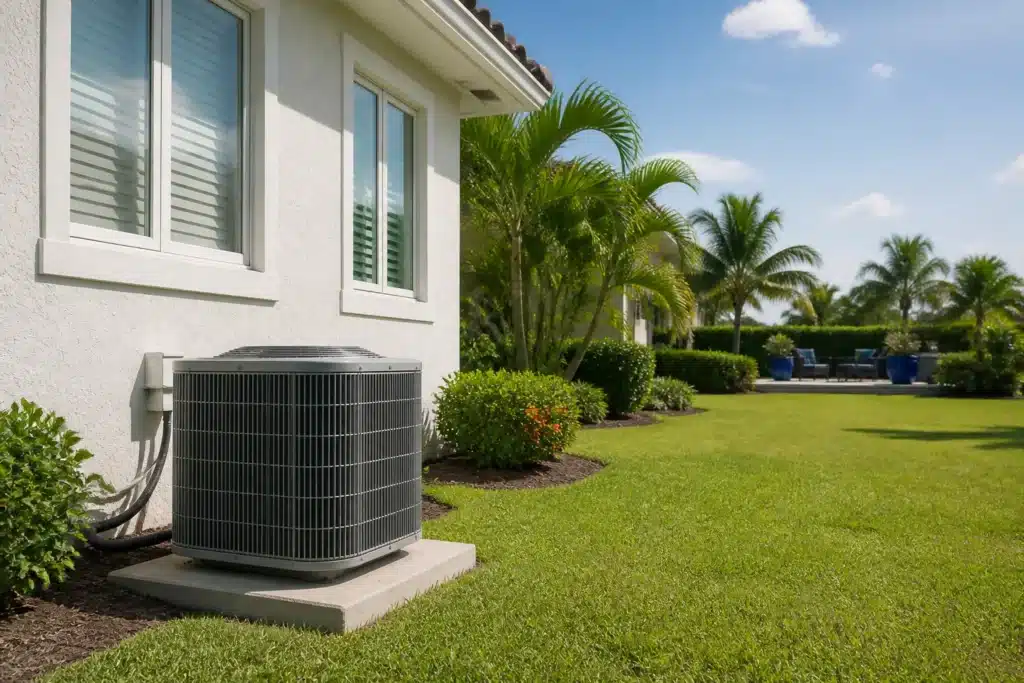
You have booked an AC tune-up, but what should happen during the appointment? If the system still cools, it can be hard to tell which checks matter, whether cleaning is included, and what a service recommendation actually means.
A useful maintenance visit should leave you with a clearer picture of your equipment's condition and the next steps for keeping it cared for. Before the appointment, confirm the service scope. Afterward, ask what was checked, what was done, and whether anything needs additional attention.
This guide to AC maintenance in Loxahatchee explains the main areas to discuss during a residential service visit. It is a practical reference for homeowners, not a promise that every task is included in every package. Your equipment, access conditions, and booked service determine the work.
Table of Contents
Start with the Purpose and Scope of the Visit
Preventative maintenance is planned care for an operating system. It can involve inspection, cleaning, adjustments, and performance checks, depending on the equipment and service agreement. A repair appointment focuses on diagnosing and correcting a specific problem.
The two can overlap. A maintenance inspection may uncover a worn component or a drainage concern that needs separate work. That finding should be explained before you are asked to approve a repair.
When booking, ask for the service checklist and clarify any exclusions. Trane's homeowner maintenance guidance recommends checking what an appointment includes because some tasks may carry an additional charge. Use that same approach whether you book a single visit or a maintenance plan.
Tell the scheduler if the AC is failing to cool, leaking water, repeatedly shutting down, or behaving unusually. Those details may change the type of appointment you need. A routine tune-up should not be used as a substitute for evaluating an active problem.
For a system with a current fault, Tri-County's AC repair service may be the more appropriate starting point. Explain what is happening so the team can discuss the next step.
Prepare Your Home and Observations
You can make the appointment more productive without opening the equipment. Write down anything you want the technician to know: a room that stays warmer, a new sound, when you first noticed a change, or moisture you saw near the indoor unit.
Specific observations are helpful. “The back bedroom feels warmer in the afternoon” gives more context than “the AC is not right.” If a concern comes and goes, a photo or short recording taken from a safe distance may help explain it.
Make the work area accessible
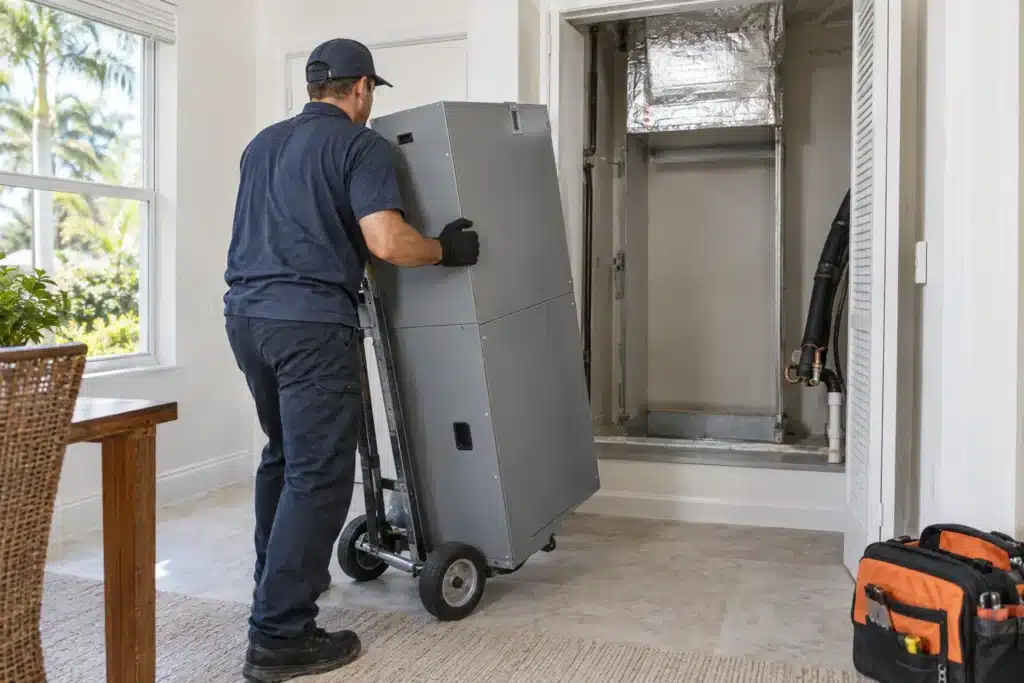
Move stored belongings away from the air handler, thermostat, and normal access route. Unlock gates needed to reach the outdoor unit and secure pets in another area. Let the team know about attic equipment, restricted access, or anything that might require special planning.
If you have more than one system, confirm which units the appointment covers. A downstairs system and an upstairs system may need separate service attention, even when they belong to the same home.
Have your records ready
Keep the last service report, any recent repair information, and your filter size available. If you have an equipment manual or maintenance-plan document, it can help clarify the recommended care and booked scope.
You do not need to clean internal components before the technician arrives. Leave service panels, electrical parts, refrigerant connections, and internal moving equipment alone. Ask the team whether it wants any particular homeowner preparation.
Inspecting Airflow and the Indoor Blower
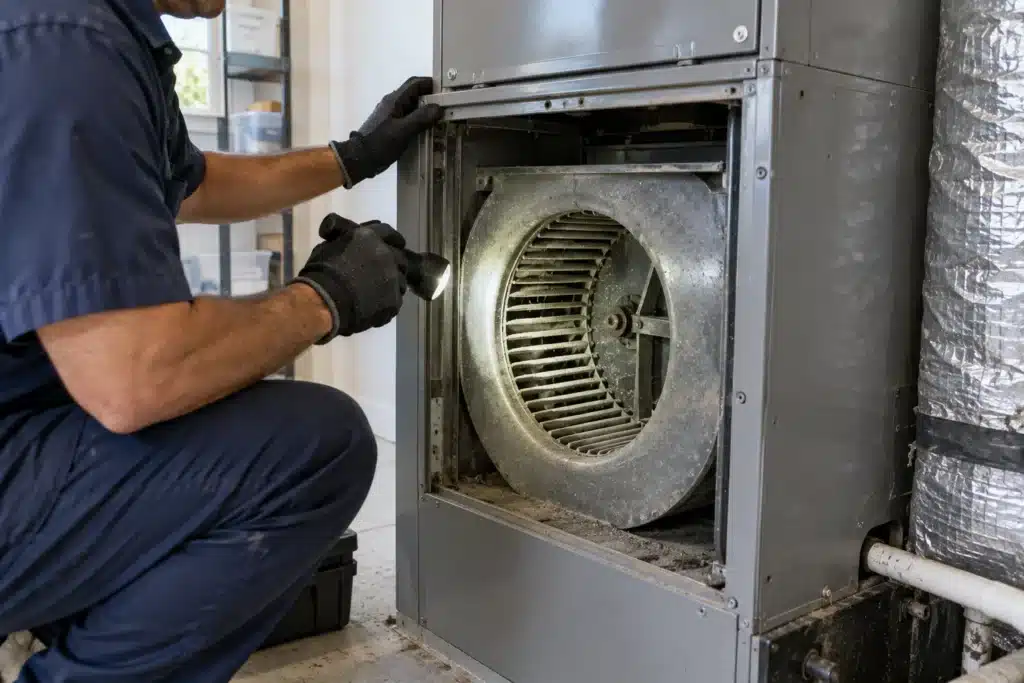
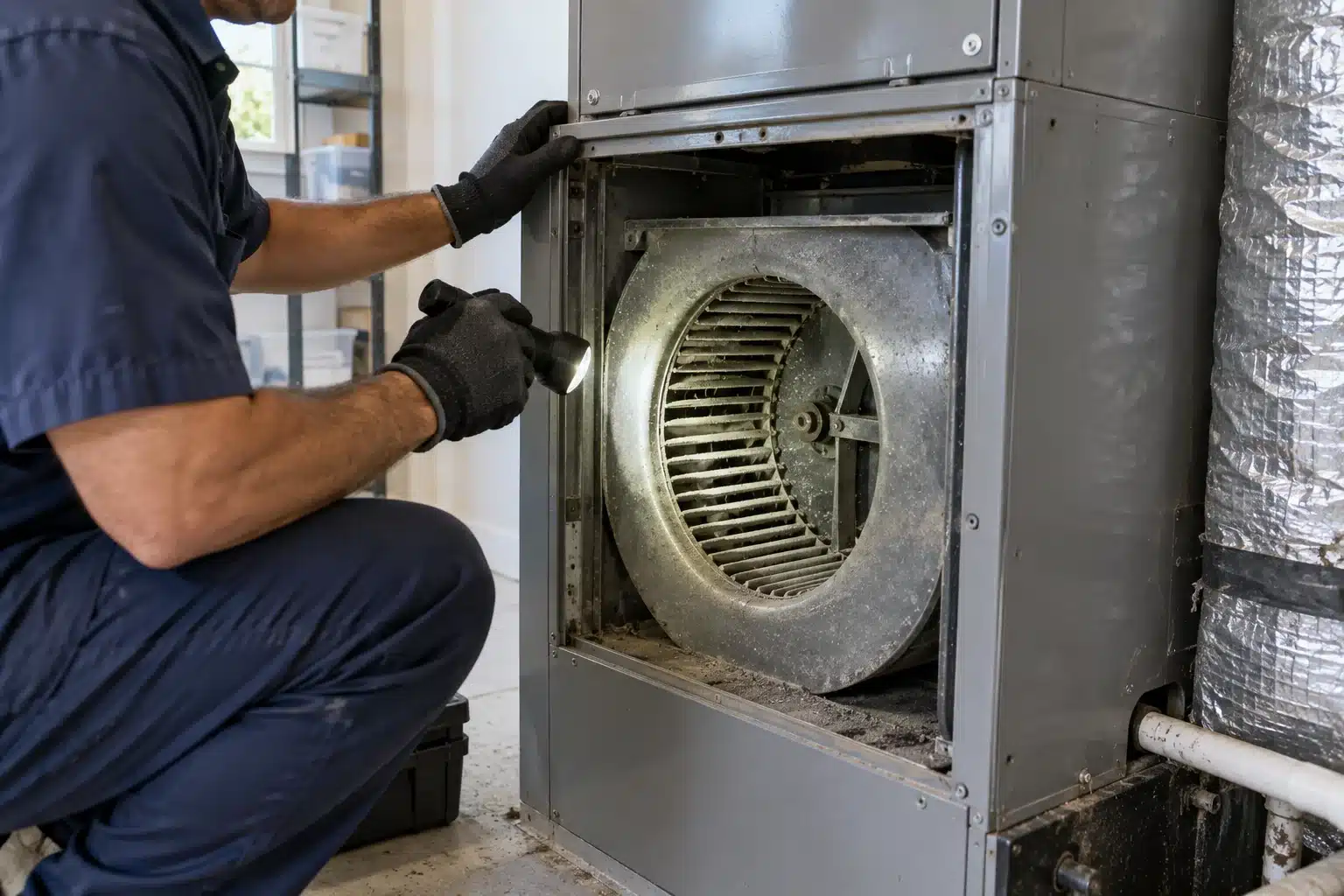
The indoor blower moves air through the system and into the home. A visit may include reviewing the filter, blower condition, and accessible air pathways. Ask which of these checks are included and what the technician found.
A dirty filter is a useful observation, but it should not automatically become the explanation for every comfort complaint. Tell the technician whether weak airflow affects one room or the whole house, and whether it has changed recently.
Ask about the condition of the blower wheel and whether cleaning is recommended. Inspection and deep cleaning are different tasks. If the wheel needs more involved work, request an explanation of the buildup, the proposed method, and any separate cost before approving it.
For example, a service report might note that the blower was inspected but a more extensive cleaning was not part of the booked visit. That distinction matters. “Checked” should not be read as “removed and cleaned.”
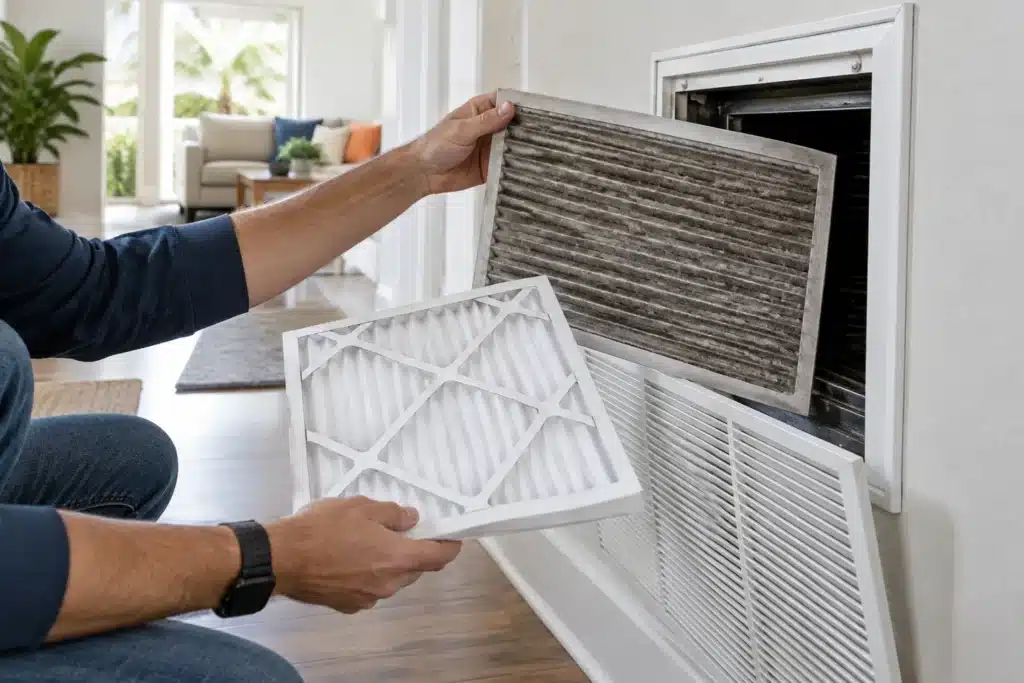
If the technician recommends a different filter, ask whether it is appropriate for your system and how to maintain it. A filter recommendation should account for equipment requirements rather than simply choosing the highest filtration rating available.
Also mention furniture or household changes near return grilles. Your technician can explain which air paths should remain clear and whether an airflow concern needs further evaluation. Duct measurements or a detailed room-by-room assessment may be a separate service, so confirm the scope.
Checking Drainage and Moisture Around the Equipment
Cooling equipment removes moisture from indoor air, and that water needs a working drainage path. In South Florida, condensate drainage deserves attention even when the calendar says fall and the AC is still in regular use.
Ask whether the visit includes inspection of the accessible drain pan and condensate line, any included cleaning, and applicable drainage safety controls. Have the technician distinguish between inspecting the drain and clearing an existing blockage.
Let the technician know if you have seen staining, damp flooring, water in a secondary pan, or repeated shutdowns associated with drainage. Point out the location from a safe distance. A stain is a reason to investigate, not proof of a particular failed part.
After the check, ask whether the drainage path was evaluated, whether any concern remains, and what follow-up is recommended. If access prevented a complete check, that limitation should appear in the service notes.
Do not bypass a safety switch or pour an unapproved chemical into the line to keep the system running. If water is near electrical equipment, keep clear and contact a professional. Tri-County's article on recurring AC drain-line clogs covers that specific problem in more detail.
Reviewing Coils and Outdoor Equipment
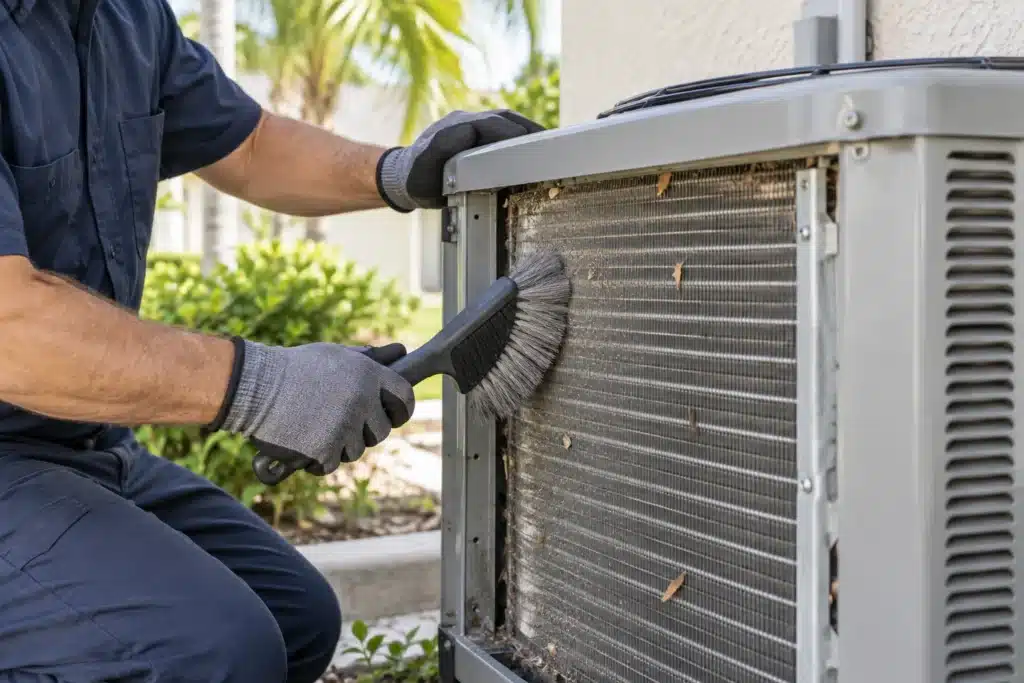
The indoor and outdoor coils are part of the system's heat-transfer process. During maintenance, ask whether their accessible surfaces were inspected and what cleaning, if any, was performed.
A quick visual check, light cleaning, and a more involved cleaning procedure are different levels of work. The appropriate approach depends on the equipment and what is found. Ask for that distinction rather than assuming the word “tune-up” means every component receives a deep clean.
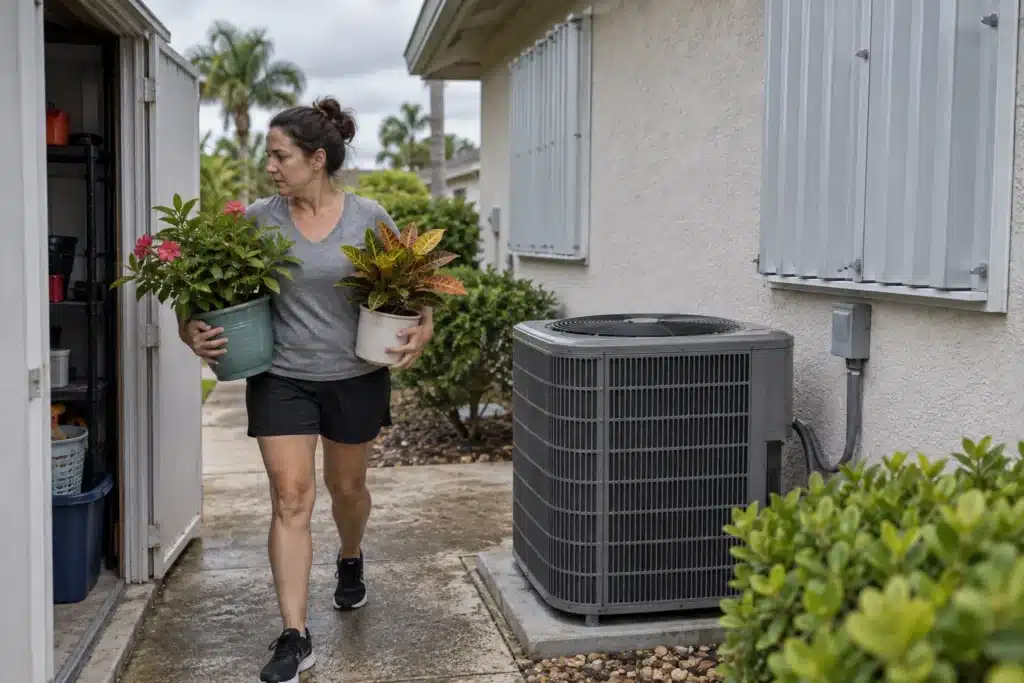
The outdoor review may also identify leaves, plant growth, or stored items affecting access around the unit. Ask which clearance guidance applies to your equipment and what homeowner upkeep is appropriate between visits.
If dirt or damage is noted, request a plain explanation and, when practical, a photo. A photo can help you understand where the concern is, but a close-up alone does not establish its effect on system performance.
For a closer look at this component-specific work, see AC coil cleaning: what homeowners can do and when to call a pro. Leave internal cleaning and delicate equipment surfaces to the appropriate professional.
Checking Controls, Electrical Condition, and Operation
A service visit should also address how the equipment operates, within the booked scope. Ask whether the thermostat and system controls were checked and whether the technician observed the equipment responding to a cooling call.
ENERGY STAR's maintenance checklist includes electrical connection checks, operating measurements, drainage, controls, coils, refrigerant assessment, and blower care. It is a general reference; the exact procedures should follow the equipment manufacturer's instructions.
Electrical inspection and testing belong to a qualified technician. If a finding leads to a repair recommendation, ask what was observed or measured and what action is being proposed. You should receive a useful explanation without needing to handle or test the component yourself.
Refrigerant assessment should also follow the equipment's service procedures. Adding refrigerant is not automatically part of every maintenance visit. If it is recommended, ask what evidence supports the work, whether further diagnosis is needed, and what charges apply.
Request a description of the operating checks completed and any limitations. Weather, access, equipment condition, and the agreed appointment scope can affect what is evaluated. If further testing is recommended, ask what question that testing is intended to answer.
A maintenance finding does not mean you must immediately approve every suggested service. Ask the technician to explain the concern, the proposed action, and whether it affects safe operation or can be planned for a later visit.
It helps to separate three things: the work included today, a repair needed to address an identified problem, and an optional improvement. Ask for those categories in the estimate or service notes so you can review them clearly.
More extensive cleaning, replacement parts, leak investigation, or duct changes may require separate authorization. Confirm the written scope and cost before work starts. If a part must be ordered, ask what happens next and whether the system can continue operating in the meantime.
A recommendation should relate to a finding or a documented need. For example, ask why a proposed drain service goes beyond today's included check, or what observation supports a suggested blower cleaning. Clear questions help you understand the recommendation without assuming it is either unnecessary or essential.
Make the Service Report Useful
Before the visit ends, ask for a concise record of what was inspected, what was cleaned or adjusted, and what remains unresolved. Keep it with your equipment documents so the next appointment starts with useful history.
You can use these questions during the handover:
- Which units and components did today's service cover?
- What work was completed, and what was inspection only?
- Were any checks limited by access or equipment condition?
- Is there anything that affects safe operation or needs prompt follow-up?
- Which recommendations need a separate estimate or appointment?
- What homeowner care and next service interval apply to this system?
If you booked because of a comfort concern, ask whether it was addressed or still needs diagnosis. A completed maintenance checklist and a resolved complaint are separate outcomes. Make sure you know which one applies.
Record the date, keep any findings or measurements provided, and save the follow-up contact information. A short, understandable report is more useful than leaving with a list of unexplained technical abbreviations.
Schedule AC Maintenance with Tri-County HVAC
Tri-County HVAC offers preventative AC maintenance for homeowners in Loxahatchee and the surrounding Palm Beach County area. When booking, describe your system, mention any current concerns, and confirm the service scope.
Call (561) 281-8074, contact the team, or schedule service online to discuss an appointment.
Frequently Asked Questions
How often should I schedule professional AC maintenance?
Annual professional checks are a common starting point in consumer guidance. Follow your equipment instructions and ask the technician whether your usage, environment, and system condition call for a different interval. South Florida cooling use may continue well beyond summer.
Does a tune-up include repairs?
Not necessarily. Confirm the package before booking. Inspection may identify a repair need, while parts, additional diagnosis, and more involved work may require a separate estimate and approval.
Is coil cleaning always included?
Confirm which coil checks and cleaning procedures are included. An inspection or light cleaning is different from a more extensive procedure. Ask what was actually performed and what, if anything, remains recommended.
Should I book maintenance if my AC has stopped cooling?
Describe the problem when you call. A system with an active fault may need a diagnostic repair appointment. The team can discuss the appropriate next step based on the symptoms you report.
Can maintenance guarantee that my system will not break down?
No. Maintenance provides an opportunity to care for the equipment and identify concerns, but it cannot guarantee future performance or prevent every failure.
Leave with Clear Findings and a Next Step
The value of a maintenance appointment includes understanding your system's condition. Confirm the scope, share your observations, and ask for clear findings at the end. You will be better prepared to handle routine care and decide on any recommended follow-up.