Hurricane AC Prep is easy to overlook when you are securing windows, gathering supplies, and watching the forecast. Yet your air conditioner has an outdoor unit exposed to windblown objects and an indoor system that may be affected by power interruptions or water. A little planning before conditions deteriorate can help you avoid preventable damage and make safer decisions afterward.
For South Florida homeowners, the goal is not to make an AC system storm-proof. No maintenance visit or cover can guarantee that. The useful goal is simpler: remove avoidable hazards, know how to shut the system down safely, and recognize when it should not be restarted. This guide separates homeowner tasks from work that belongs to an HVAC technician or electrician.
Table Of Contents
Quick Answer: What Should You Do For Hurricane AC Prep?
Start with the actions you can take while the weather is still safe. Keep the area around the outdoor condenser clear, secure or move lightweight objects that could blow into it, and note the location of your thermostat and HVAC electrical disconnects without opening or handling electrical equipment. If your system has an existing problem, arrange an AC maintenance visit before a storm threatens, when appointments and conditions allow.
As severe weather approaches, follow local emergency instructions. If you are preparing to leave or power becomes unstable, switch cooling off at the thermostat when it is safe to do so. Do not go outdoors or approach electrical equipment during dangerous weather. Afterward, look for visible damage from a safe distance before requesting cooling. If the unit was submerged, wiring is damaged, or the home has flood damage, keep the system off and call qualified professionals.
The timing matters. Storm preparation belongs before winds rise. Inspection belongs after authorities say it is safe to return. Neither is worth putting yourself at risk to protect equipment.
Before A Storm Is Forecast: Know Your System
Preparedness is easier when the forecast is quiet. Walk around the outside of your home in normal conditions and locate the condenser, the large cabinet with a fan on top. Notice whether tree limbs, loose landscaping material, storage bins, planters, or patio furniture could strike it in strong wind. Do not open the cabinet or remove protective panels.
Take photos of the unit, its location, and visible model information. If damage occurs later, they can help you describe what changed to a service provider or insurer. They are not a substitute for inspection or a promise of coverage.
Indoors, locate the thermostat and learn how to switch the cooling mode off. Check the owner's manual if the controls are unfamiliar. Know which breaker serves the HVAC system, but do not experiment with it during a storm or repeatedly reset a breaker that trips. If you have a generator or whole-home backup power, have a qualified electrician explain what HVAC equipment it can actually support. A portable generator must never be connected to house wiring without an approved transfer arrangement installed by a professional.
Address Existing Problems Before They Become Storm Problems
A system that already struggles to cool, makes a new noise, leaks water indoors, or trips a breaker needs attention regardless of the forecast. A storm can make access and scheduling harder, but it does not change the underlying diagnosis. Ask for service early rather than waiting until an approaching storm limits safe outdoor work.
Routine maintenance can reveal problems, but it cannot prevent wind, flood, or utility damage. If the AC is already malfunctioning, request AC repair rather than assuming a tune-up will resolve it.
When A Storm Is Forecast: Prepare The Outdoor Unit
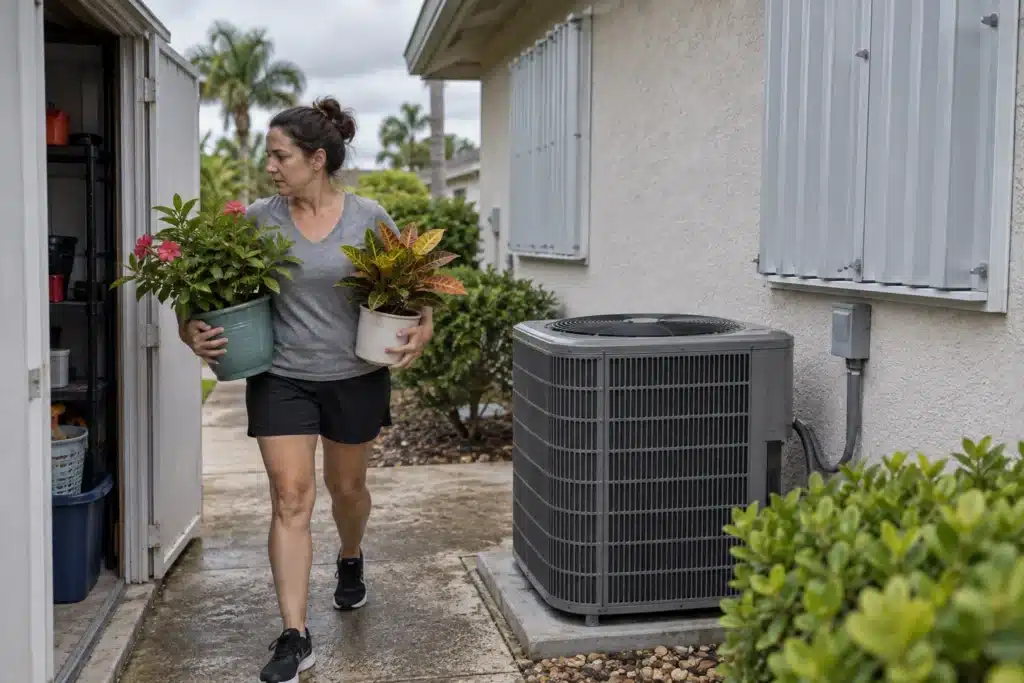
Once a storm may affect your area, focus on loose objects and safe access. Bring small potted plants, toys, lightweight furniture, tools, and yard decorations indoors or into a secure location. Trim or remove vulnerable branches only if you can do so safely and well before winds begin; larger tree work belongs to a qualified crew. Keep landscaping and storage away from the condenser so air can move around it during normal operation.
Look at the unit from the ground. If it appears loose on its pad, the pad is undermined, or the cabinet is already damaged, contact an HVAC professional while conditions permit. Do not drill into the cabinet, strap across the fan opening, or improvise an anchor. The appropriate fastening depends on the equipment, mounting surface, and local requirements. A technician can assess the existing installation and advise whether a correction is needed.
Should You Cover The Condenser?
A solid tarp or plastic wrap can obstruct airflow and trap moisture if it is left on when the AC runs. It can also become windborne if it is not properly secured. There is no universal cover that makes an outdoor unit hurricane-proof. Follow the equipment manufacturer's instructions and the advice of a qualified installer for your specific system. If a manufacturer-approved temporary cover is used, cooling must remain off while the cover blocks the unit, and the cover must be removed before operation resumes.
Do not go out to install, adjust, or remove a cover after conditions become hazardous. Securing the household and following emergency directions take priority over the condenser.
If water often pools near the condenser, discuss a longer-term solution with an appropriate contractor before the next storm. Do not alter the equipment pad or dig a last-minute trench. After a storm, do not approach the unit through standing water, debris, or downed lines.
Power Interruptions And Safe Shutdown
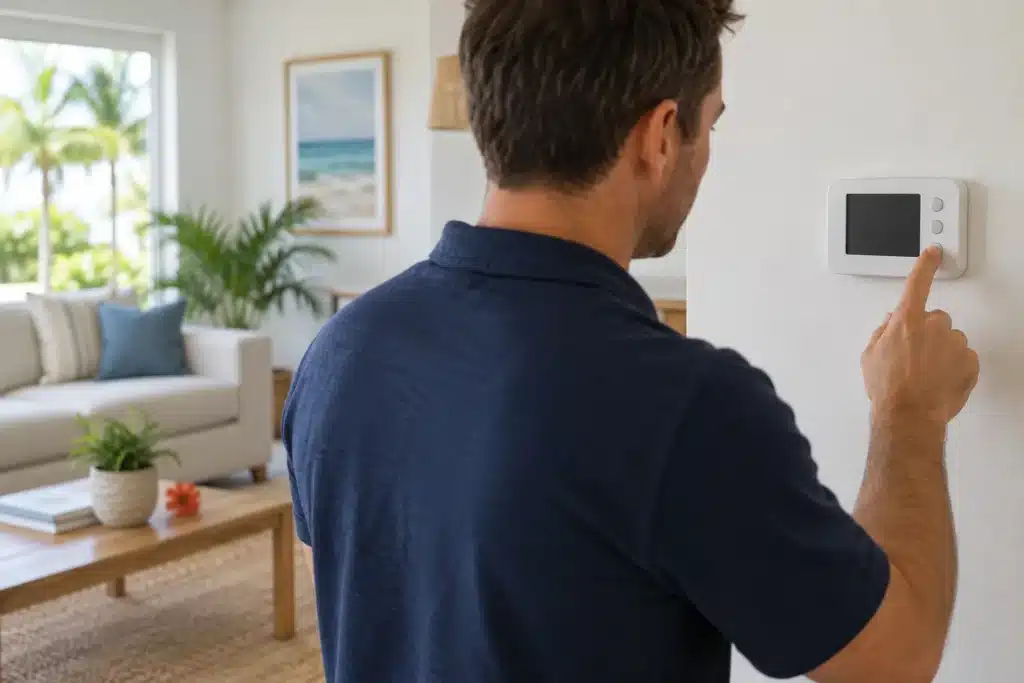
Storms can interrupt utility power, cause brief outages, or create unstable conditions. If severe weather is approaching and it is safe to use the thermostat, switching the cooling system off is a straightforward way to avoid an automatic call for cooling while you prepare to leave or wait out the storm. Do not reach for an exterior disconnect in rain, flooding, or high wind. If local officials direct you to evacuate, follow those instructions first.
After an outage, avoid repeatedly turning the thermostat on and off to see whether cooling returns. Many systems include a built-in delay that protects the compressor after a power interruption. If the home has power but the AC does not respond, check the thermostat display and note any alerts. A breaker that trips again after a reset, an electrical smell, buzzing, or visible damage is a reason to stop and request service. Do not keep resetting the breaker.
Backup power deserves special caution. Most portable generators are not designed to run a central AC system, and improper connections can endanger both occupants and utility workers. Use generators only according to the manufacturer's instructions, outdoors and away from doors, windows, and vents. Ask a qualified electrician about transfer equipment and load capacity before a storm, not during an outage.
After The Storm: Inspect Before Restarting
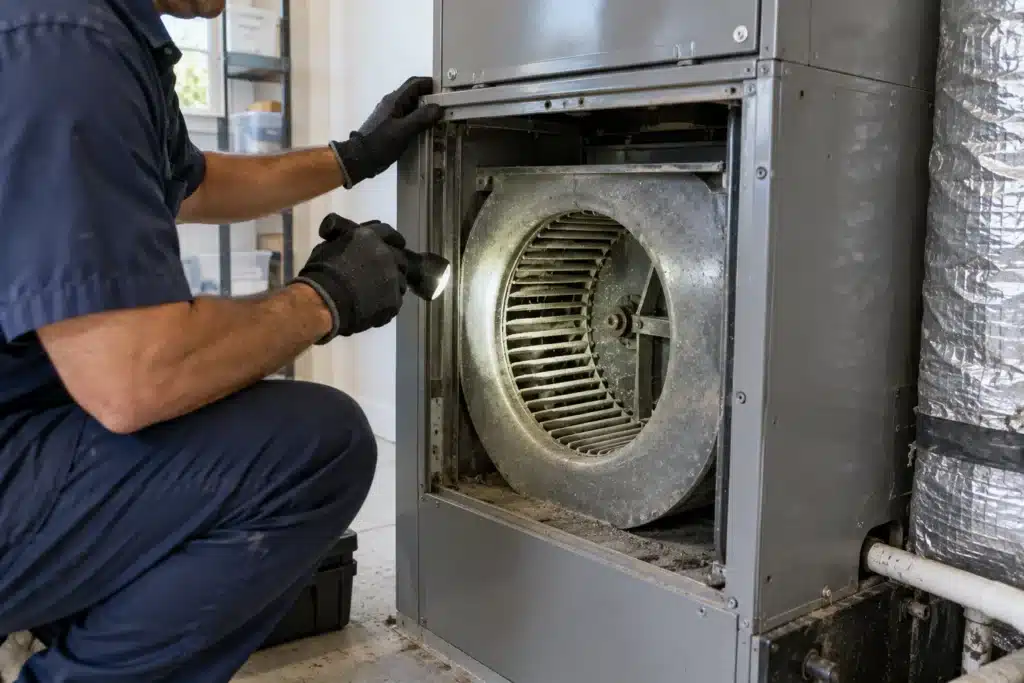
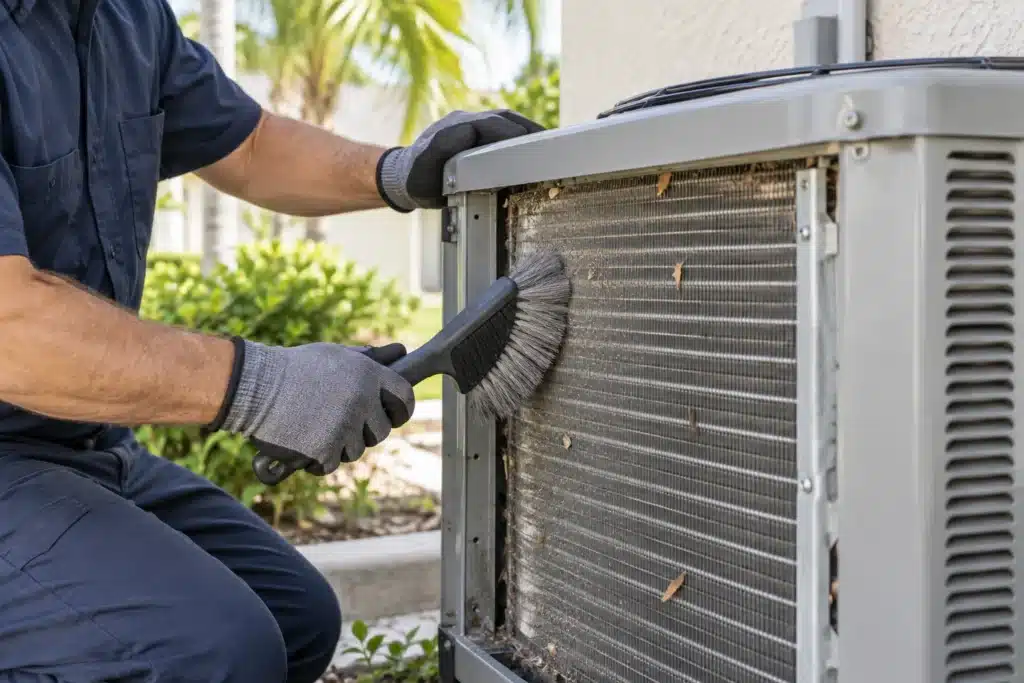
Wait until local authorities say conditions are safe. Before turning cooling back on, make a visual check from dry, stable ground. Look for a shifted condenser, bent cabinet, broken fan grille, fallen branches, debris wedged against the coil, disconnected refrigerant lines, damaged wiring, or signs that water reached the equipment. Check around the indoor air handler for roof leaks or water damage as well.
Do not touch downed wires, open electrical panels, reach into the fan grille, or pull debris from a damaged unit. Photograph what you can from a safe position. If there is visible damage or you are unsure whether the equipment was exposed to floodwater, leave it off and contact a professional.
If the home and equipment remained dry, there is no visible damage, and utility power has been restored normally, remove any temporary cover before requesting cooling. Set the thermostat to its usual cooling mode and give the system time to follow its normal startup delay. Listen for unusual sounds and check that cool air is reaching the rooms. Stop the system and request service if the outdoor unit does not start, the breaker trips, the equipment makes a new grinding or buzzing sound, or water appears where it should not.
A working thermostat is not proof that every component is safe. Damage to the outdoor unit, indoor equipment, ductwork, or electrical supply may still require evaluation.
What If The AC Or Home Was Flooded?
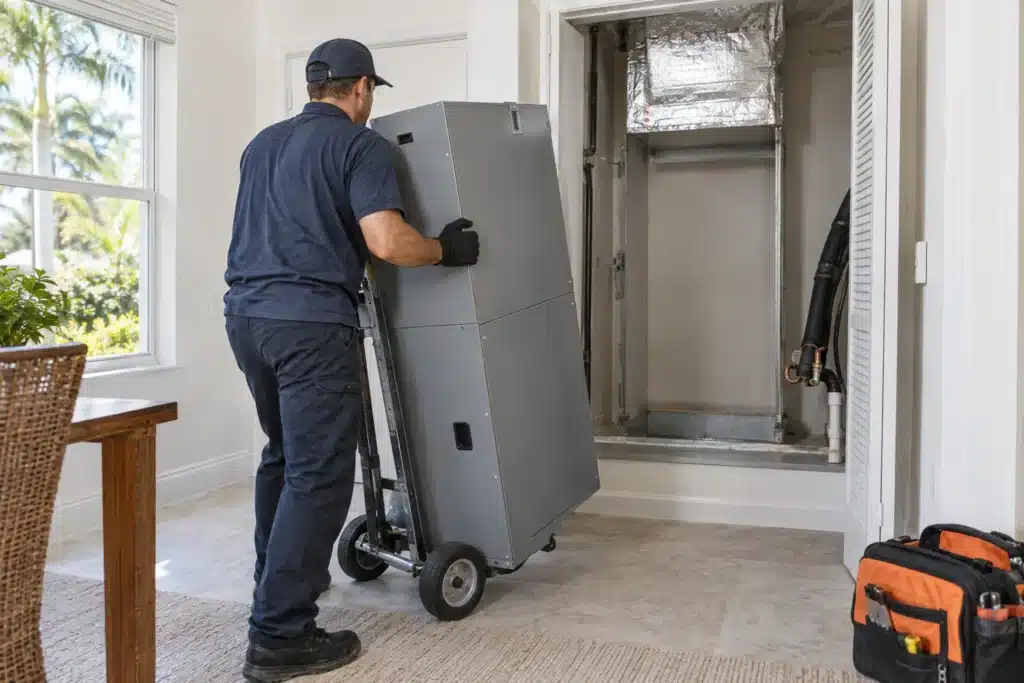
Floodwater changes the decision completely. Do not energize an outdoor condenser that was submerged or an indoor air handler in a flooded area. Water can damage controls and motors and leave contamination in parts of the system that are not visible from outside. Even if the cabinet looks intact after the water recedes, a professional inspection is needed before the system is used.
If the home itself flooded, do not use the HVAC system to dry it out. The U.S. Environmental Protection Agency advises leaving HVAC equipment off until the home has been cleaned and dried and needed repairs and remediation are complete. Electrical hazards, wet ducts, and contaminated materials need attention before air is circulated through the home. A qualified electrician may need to assess the electrical system, and an HVAC professional can evaluate the equipment and ducts.
Do not enter a flooded structure or approach equipment in standing water until it has been declared safe. Cooling comfort matters, but electrical safety and safe reentry come first.
When To Call An HVAC Professional
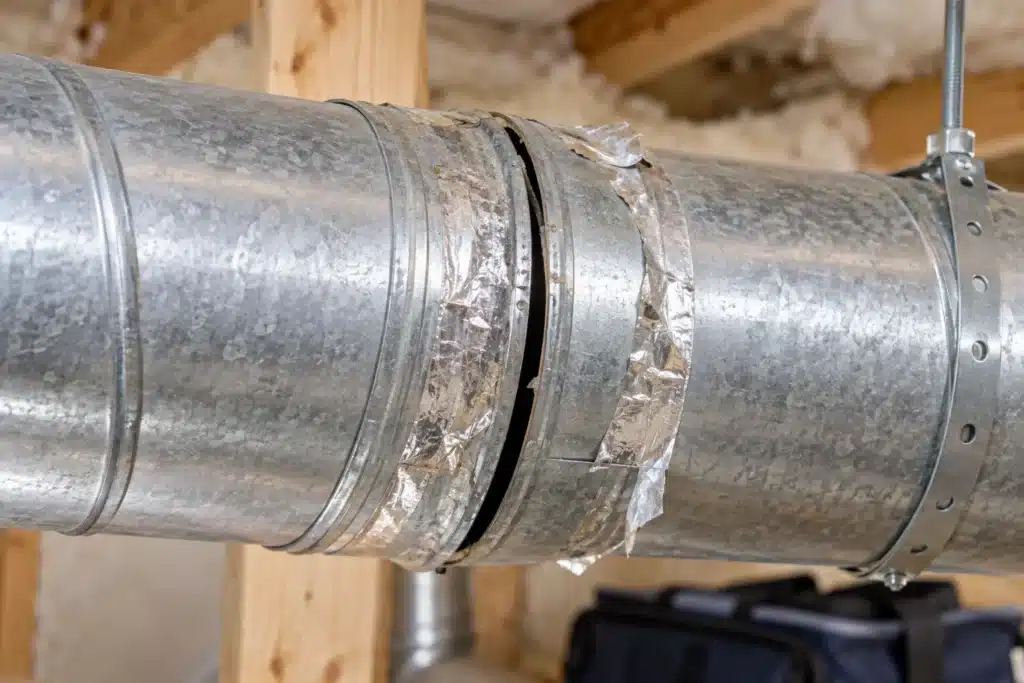
Some post-storm conditions are clear stop signs. Request professional service if the condenser moved, was struck by debris, sat in floodwater, has damaged lines or wiring, or makes a new noise when it attempts to run. Call if the indoor system was exposed to a roof leak, the breaker trips repeatedly, the thermostat is blank despite restored household power, or the AC runs without cooling.
Describe what you observed rather than guessing at the failed part. Note whether the outdoor fan or indoor blower runs, any thermostat message, water exposure, and when the problem began. Photos can help the technician prepare. Do not remove panels or attempt electrical testing yourself.
Tri-County HVAC serves homeowners in Palm Beach County and nearby South Florida communities. If you need an inspection or repair after a storm, contact Tri-County HVAC or call (561) 281-8074. Service availability may depend on road, utility, and weather conditions.
A Short Homeowner Checklist
Keep this short list with your broader household storm plan:
- Before the forecast becomes urgent: photograph the outdoor unit, learn the thermostat's off setting, and address existing AC problems.
- While conditions are safe: move loose objects away from the condenser and follow local storm preparations.
- As severe weather approaches: turn cooling off at the thermostat if appropriate and safe, then prioritize shelter or evacuation instructions.
- After the all-clear: inspect from a safe, dry location for debris, movement, damaged components, and water exposure.
- Before restarting: remove any temporary cover; keep the system off if it was flooded or appears damaged.
- If cooling fails or anything seems unsafe: stop trying to restart it and request professional help.
Hurricane AC Prep is part of a whole-home plan, not a substitute for weather alerts, evacuation orders, or manufacturer instructions.
Frequently Asked Questions
Should I turn off my AC before a hurricane?
If conditions are safe and you are preparing for severe weather or leaving the home, you can switch cooling off at the thermostat. Follow evacuation and utility instructions for your area. Never go outside or handle electrical equipment in dangerous weather just to shut down the AC.
Can I cover my outdoor AC unit with a tarp?
Do not leave a solid cover on an operating unit. A tarp can block airflow, hold moisture, or become windborne. Check the manufacturer's guidance and ask a qualified installer before using a temporary cover. Remove it before running the system.
Can I restart the AC as soon as power returns?
First confirm that the property and equipment are dry and show no visible damage, and that power has returned normally. Remove any cover and allow for the system's normal startup delay. If the unit was flooded, struck by debris, or shows electrical damage, leave it off for inspection.
Does storm maintenance guarantee my AC will survive?
No. Maintenance can identify ordinary equipment problems and support reliable operation, but it cannot eliminate the risk from wind, flying debris, flooding, or utility damage. A secure installation and a practical household storm plan address different parts of the risk.
What if the condenser was underwater but looks fine now?
Do not turn it on. Floodwater can affect electrical components and other parts that are not visible from outside. Have the equipment evaluated by a qualified professional, and address any broader electrical or flood-remediation needs first.
Plan Early, Then Put Safety First
Hurricane AC Prep is most useful before the storm: clear the area around the condenser, understand your controls, and arrange service for existing problems while conditions are safe. After the storm, a careful visual check helps you decide whether normal operation can resume or whether the system needs a professional assessment. When water, damaged wiring, or structural hazards are involved, leave the equipment off.
If your AC needs attention before or after severe weather, Tri-County HVAC can help evaluate the problem and explain the next step. Call (561) 281-8074 or use the contact page to request service.