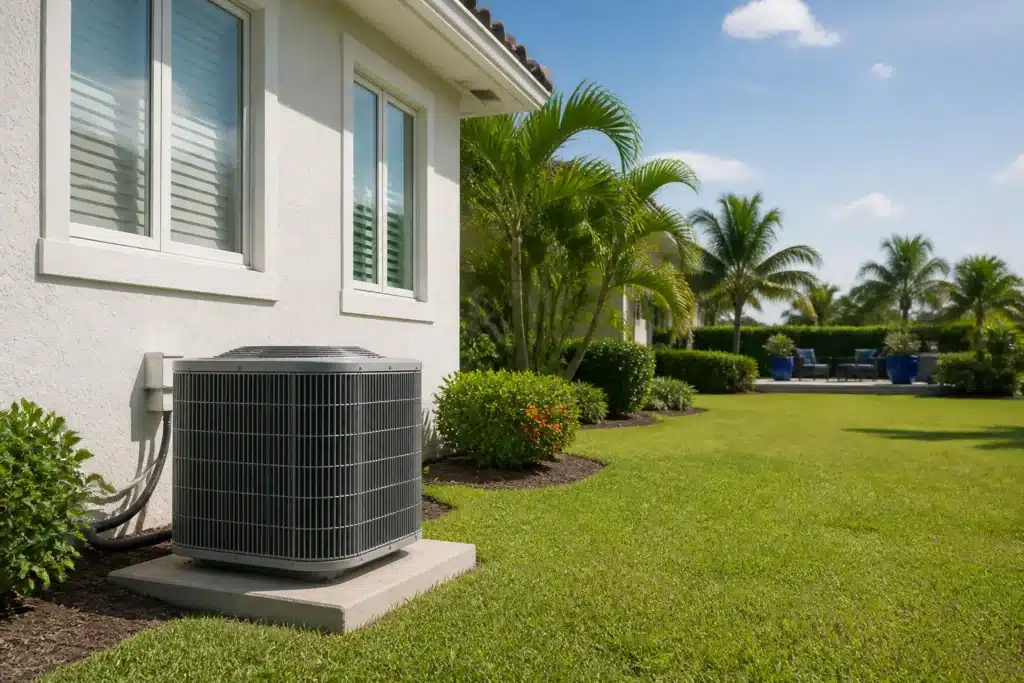
In South Florida, your air conditioner does more than cool the air. It also removes a great deal of moisture from it. That moisture has to leave the system somewhere, and the AC Drain Line is a key part of that process.
When the drain line starts to clog, homeowners may notice water near the indoor unit, a musty smell, a shut-off switch tripping, or an AC that stops running when they need it most. A clog is not always a major repair, but it is worth taking seriously. Water that cannot drain properly can create comfort problems and may lead to damage around the system if it is ignored.
Table Of Contents
What Your AC Drain Line Does
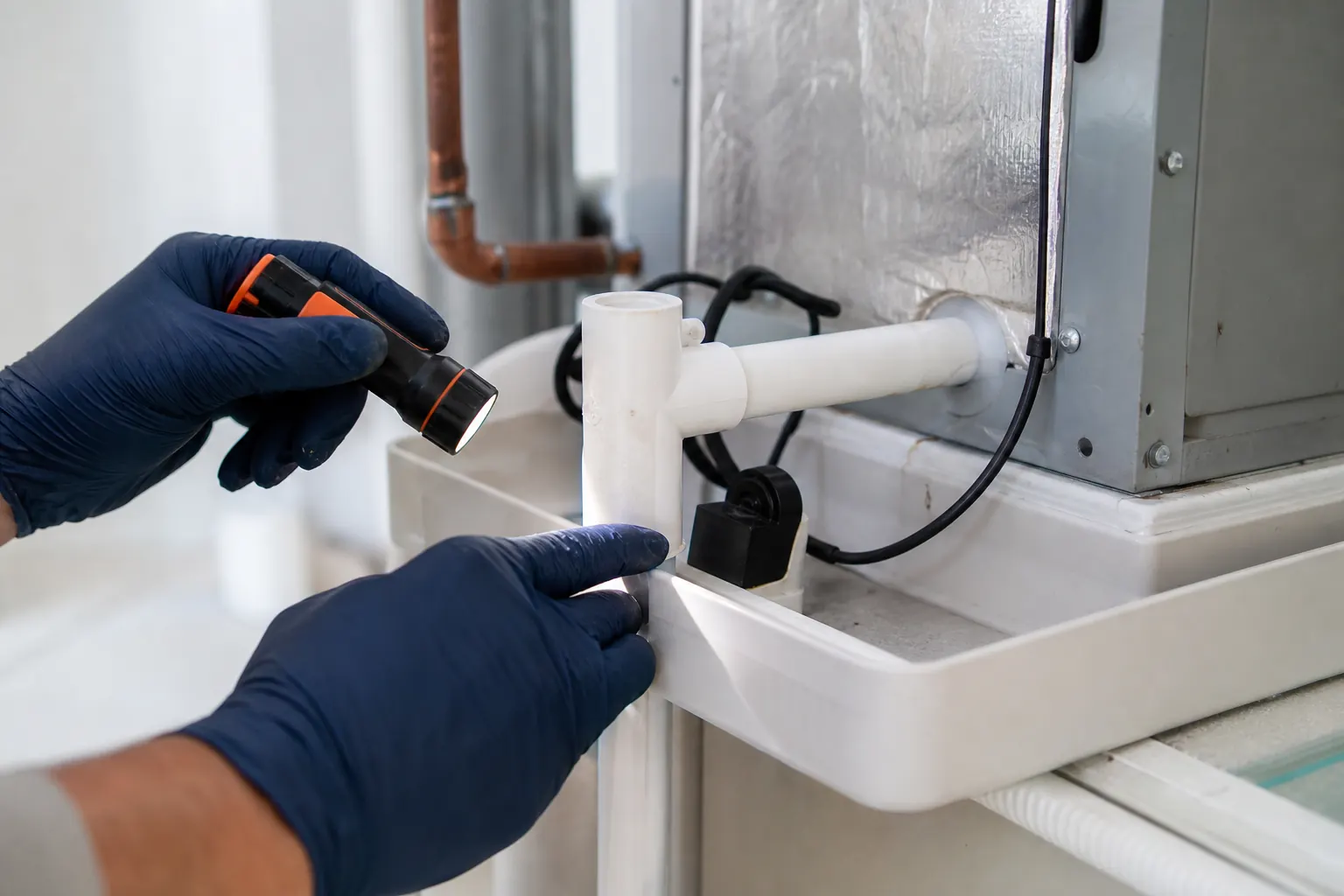
As warm indoor air moves across your AC's cold evaporator coil, moisture in that air condenses into water. The water collects in a drain pan and travels out through a small pipe, usually made of PVC. That pipe is the AC Drain Line.
It is a simple system, but it works hard in a humid climate. During long cooling cycles, an air conditioner can remove a meaningful amount of moisture from the home. If the line is clear and pitched correctly, the water drains away without much thought from the homeowner. If it is blocked, the water may back up into the pan or trigger a safety switch that turns the system off.
That is why a drain issue can feel sudden. The thermostat may be set normally, the equipment may have been cooling earlier in the day, and then the system stops or water appears where it should not be. The right next step depends on what you see and where the water is coming from.
Why AC Drain Line Clogs Happen In South Florida
South Florida's heat and humidity keep air conditioners running for much of the year. More run time means more condensation moving through the drain system. Over time, a combination of moisture, dust, biofilm, and small debris can collect inside the line.
Moisture Creates The Right Conditions For Buildup
The inside of a condensate drain line is damp by design. That can allow a slimy buildup to form gradually, especially when a system runs often. The material may stick to the pipe walls, then trap more debris as water moves through it. Eventually, the opening can narrow enough to slow drainage or stop it.
Dirty Filters Can Add To System Strain
A dirty filter does not directly prove that a drain line is clogged, but restricted airflow can affect how the system performs and how moisture behaves around the coil. Keeping up with filter changes is one part of preventative AC maintenance. It helps a technician inspect the equipment before several small issues build into one inconvenient service call.
Drainage Components Can Have More Than One Issue
Sometimes the line itself is not the only concern. A pan may be damaged, a float switch may be responding to standing water, or a drain connection may need attention. There can also be an underlying airflow, coil, or installation issue that changes how water moves through the system. A professional inspection is useful when the same problem keeps returning.
Warning Signs Of A Clogged AC Drain Line
Not every sign points to the same cause, but these are good reasons to look closer or schedule service:
- Water near the indoor air handler or around a ceiling vent
- A drain pan that looks full or has standing water
- Musty odors near the indoor unit or supply vents
- An AC that suddenly shuts off even though the thermostat is calling for cooling
- Repeated float-switch trips
- Water staining near the system or a nearby ceiling
- A drain outlet that is not releasing water during a long cooling cycle
Water around an HVAC system deserves prompt attention. It may be related to a clogged line, but it can also come from another part of the equipment. If you see active leaking, water near electrical components, or ceiling damage, it is safer to turn the system off and arrange for AC repair rather than trying to work around the problem.
What You Can Check Safely Before Calling
There are a few observations homeowners can make without taking equipment apart. These checks will not diagnose every drain problem, but they can help you describe the situation clearly when you call.
Look For Visible Water
Check the area around the indoor unit from a safe distance. Notice whether water is on the floor, inside the drain pan, or showing up around a ceiling below the equipment. Do not remove access panels or touch wiring. A photo of the area can also help document what changed.
Check Your Air Filter
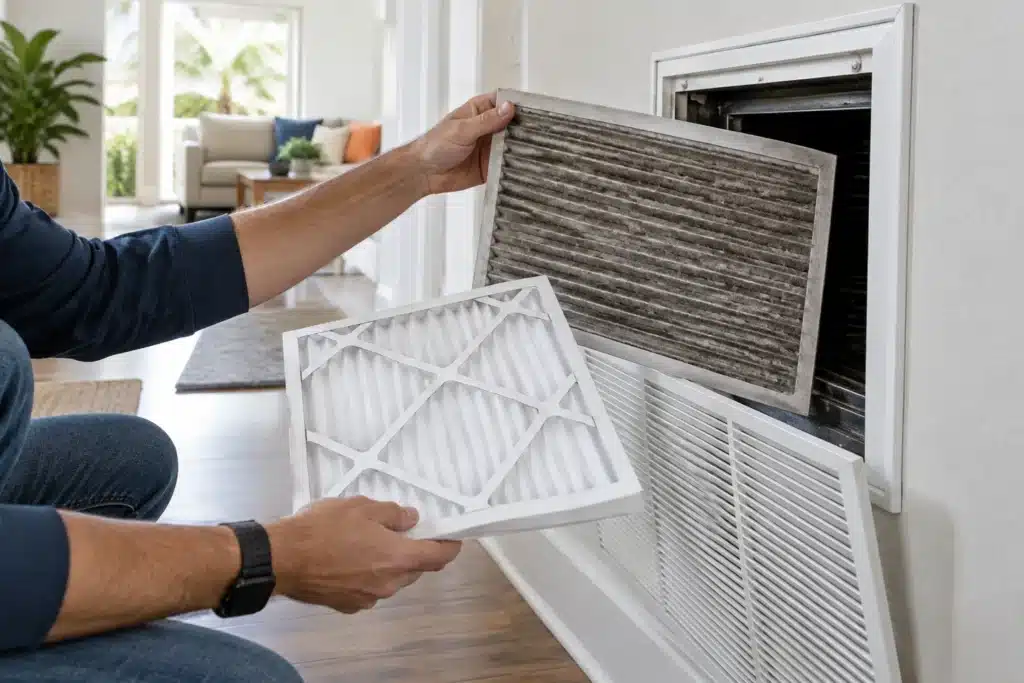
If the filter is overdue or visibly dirty, replace it with the correct size and type for your system. Do not force a filter into place. A clean filter is good routine care, but do not assume it will clear a drainage issue that has already caused water backup.
Notice Whether The System Has Shut Down
Some systems use a float safety switch that stops cooling when water rises too high in the pan. If the AC has shut off and there is evidence of water, avoid repeatedly resetting it. The shutoff may be preventing an overflow. Let a technician determine why the water is not draining normally.
Pay Attention To Odors And Timing
A musty smell, a drain issue that returns after heavy use, or a problem that appears after storms can give useful context. Humidity and indoor comfort are connected, so recurring odors or dampness may also be worth discussing with the team that handles indoor air quality solutions.
When To Call An HVAC Professional
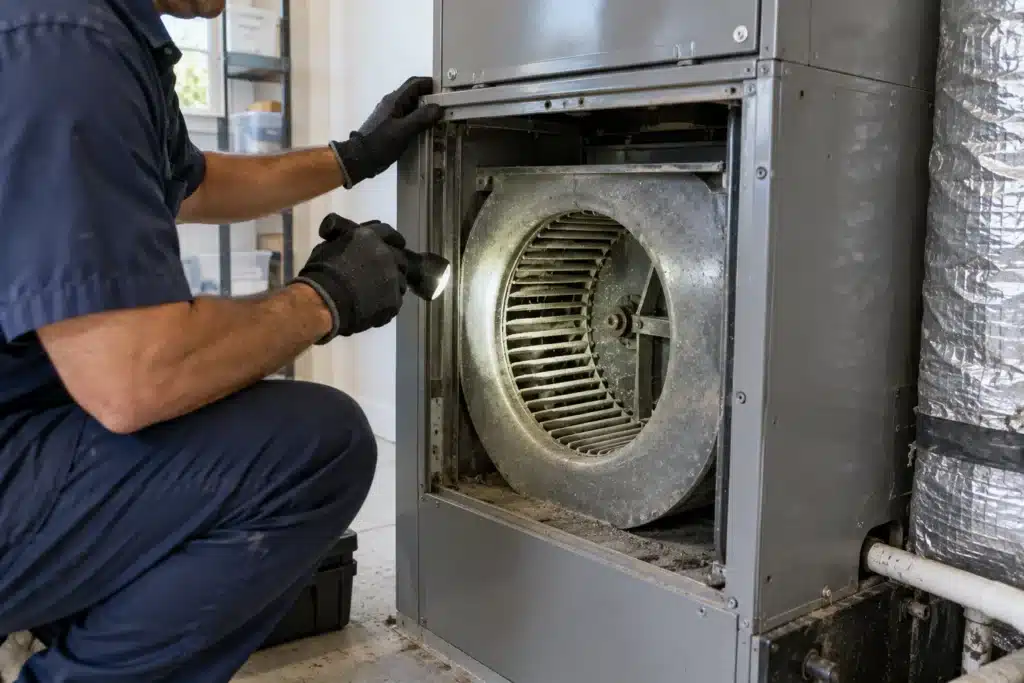
Call for service when you have standing water, repeated system shutoffs, an active leak, or a clog that seems to come back after a temporary fix. These situations can involve more than the visible section of pipe, and guessing can lead to a mess or overlook another problem.
A technician can inspect the drain pan, line, trap, safety switch, coil area, and related components. They can also look for the reason buildup is recurring instead of treating the same symptom again. That matters in Palm Beach County, where the cooling system has to manage high moisture loads for long stretches of the year.
For urgent water leaks or an AC that has stopped cooling during severe heat, call Tri-County HVAC at (561) 281-8074 or use the contact page to schedule service. The goal is to restore safe drainage and reliable comfort, not to make assumptions about what caused the issue.
How To Help Prevent Future AC Drain Line Clogs
You cannot eliminate every HVAC problem, but routine care can make drain issues easier to catch early. A maintenance visit gives the system a chance to be cleaned and inspected before a small drainage concern turns into an unexpected shutdown.
For South Florida homes, helpful habits include changing filters on schedule, keeping the area around the indoor unit clear, watching for new odors or water, and arranging regular maintenance. If your home has had repeated drainage problems, tell the technician. A recurring issue may call for a closer review of the equipment and drainage setup.
It is also smart to pay attention after long periods of heavy cooling. A drain line that handles normal operation may show a problem when the AC has been running almost continuously. Early attention is usually easier than waiting for water to back up.
Frequently Asked Questions
Can I use vinegar to clear an AC drain line?
Some homeowners use household methods as part of regular upkeep, but the right approach depends on the system and the severity of the blockage. If there is standing water, a shutoff switch has tripped, or the clog keeps coming back, professional service is the safer choice.
Why does my AC drain line clog so often?
Frequent cooling, high humidity, moisture buildup, dust, and a system condition that needs attention can all play a role. A technician can check whether there is a recurring cause beyond the visible drain pipe.
Will a clogged drain line make my AC stop working?
It can. Many systems have a safety switch that turns the equipment off when water rises in the drain pan. That helps reduce overflow risk, but it also means you may lose cooling until the drainage issue is addressed.
Is water around my indoor AC unit always a drain-line clog?
No. A clogged line is one possibility, but water can come from other drainage or equipment issues. Because water and HVAC components do not mix well, it is best to have the source checked rather than assuming.
Schedule Help Before A Small Drain Issue Becomes A Bigger Mess
An AC Drain Line problem can start quietly, then interrupt cooling or create water damage when the system is working hard. If you notice water, odors, repeated shutoffs, or a drain issue that keeps returning, Tri-County HVAC can inspect the system and recommend the appropriate next step. Call (561) 281-8074 or contact Tri-County HVAC to schedule service in Palm Beach County and surrounding South Florida communities.