Ice on an air conditioner can seem strange during a hot South Florida summer. The system is supposed to cool the home, but it should not become covered in frost or ice. If you notice ice on a refrigerant line, weak airflow from the vents, or water near the indoor unit after the ice melts, the cooling system may be freezing up.
AC Freezing Up is usually a symptom rather than a complete diagnosis. Restricted airflow, a dirty filter or coil, a blower problem, or a refrigerant-related concern can all allow the indoor evaporator coil to become too cold. Continuing to operate the system while it is frozen can make cooling worse and may place additional strain on important components.
This guide explains why an AC may freeze in South Florida, which warning signs homeowners can recognize, what to do safely, and when to call Tri-County HVAC for professional service in Loxahatchee, Palm Beach County, and nearby communities.
Table Of Contents
Quick Answer: Why Is My AC Freezing Up?
An air conditioner may freeze when the indoor evaporator coil becomes cold enough for moisture on the coil to turn into ice. Two broad conditions often contribute: not enough warm indoor air is moving across the coil, or the refrigeration system is operating under conditions that make the coil unusually cold.
A dirty air filter, blocked return, closed vents, dirty evaporator coil, or blower problem can reduce airflow. A refrigerant leak, metering concern, or another refrigeration-system problem can also affect coil temperature. The visible ice does not identify which cause is present, so repeated freezing needs a professional diagnosis.
If you see ice, turn the cooling mode off. Check the filter and make sure vents and returns are not blocked, but do not remove equipment panels or handle refrigerant components. Allow the ice to melt naturally and watch for water around the indoor unit. If the system freezes again, airflow remains weak, or cooling does not return to normal, request professional AC repair.
What It Means When An Air Conditioner Freezes
The indoor evaporator coil absorbs heat from air moving through the system. Moisture from the air collects on the cold coil and normally drains away as liquid water. This cooling and moisture-removal process is part of normal air-conditioner operation.
When the coil temperature drops too far, that moisture can freeze instead of draining. A thin layer of frost can grow into heavier ice as the system continues running. The ice then restricts airflow even more, which can make the condition worse. The home may feel warm or humid even though the equipment is operating.
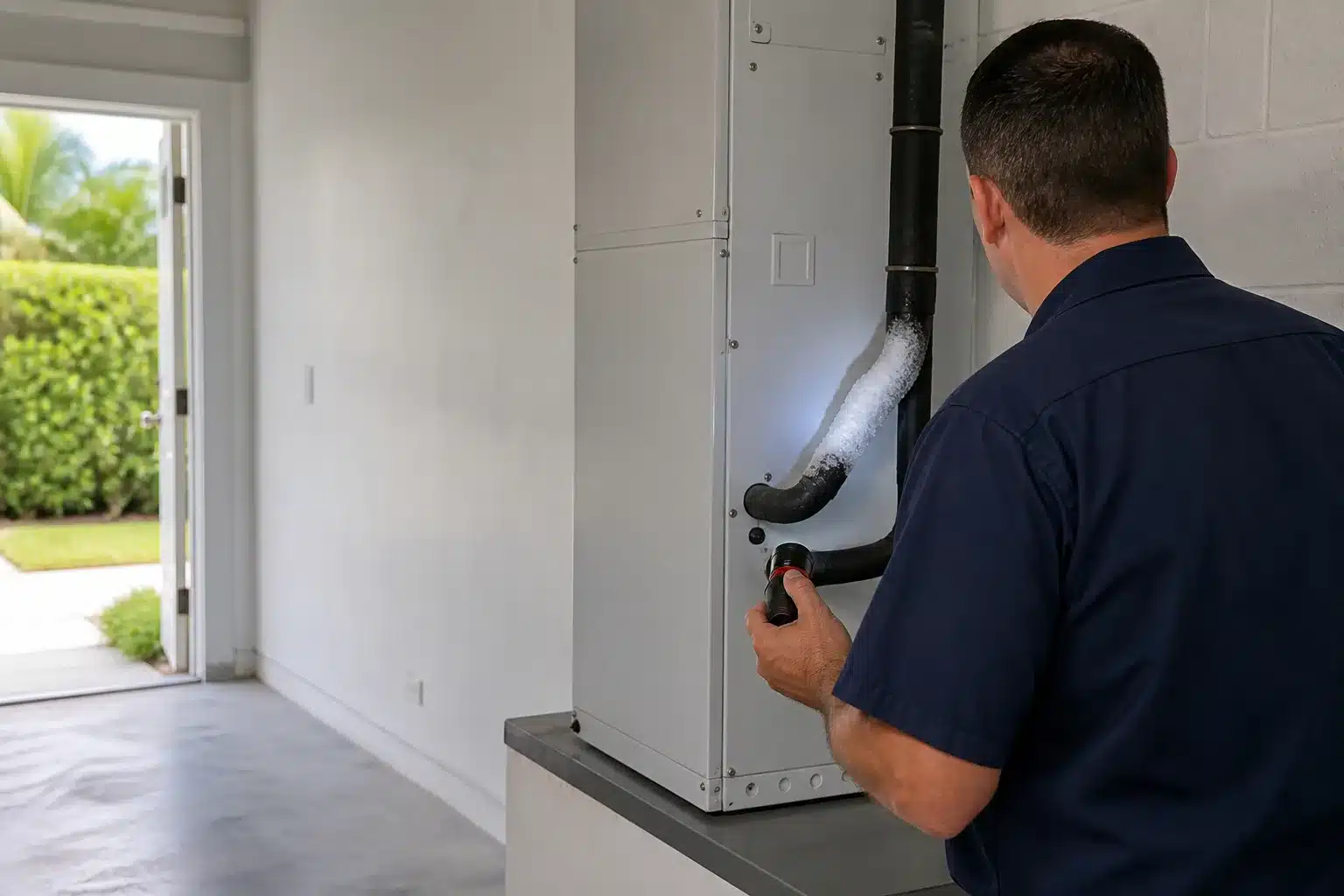
The visible ice may appear on copper refrigerant tubing near the indoor unit, around the air-handler cabinet, or on a line near the outdoor condenser. The actual evaporator coil is often inside a cabinet, so homeowners may notice symptoms without seeing the frozen coil itself.
Warning Signs Of A Frozen AC System
Ice is the clearest warning sign, but it is not always the first one. Pay attention to a combination of cooling, airflow, moisture, and equipment changes.
- Frost or ice appears on a copper line, insulated refrigerant line, or air-handler cabinet.
- Airflow from several supply vents becomes noticeably weak.
- The system runs for long periods but the home does not cool normally.
- Air from the vents feels warmer than expected.
- Water appears near the indoor unit after ice begins to melt.
- The home feels more humid while cooling performance declines.
- The system begins turning on and off differently from its normal pattern.
These symptoms can overlap with other AC problems. For example, an article about an AC running but not cooling covers several causes that do not involve ice. The system needs to be evaluated as a whole before the repair is determined.
Common Reasons An AC Freezes In South Florida
South Florida heat does not prevent an indoor coil from freezing. The temperature at the coil depends on airflow and refrigeration-system operation, not just the temperature outside. Several different problems can create the same visible result.
A Dirty Or Restrictive Air Filter
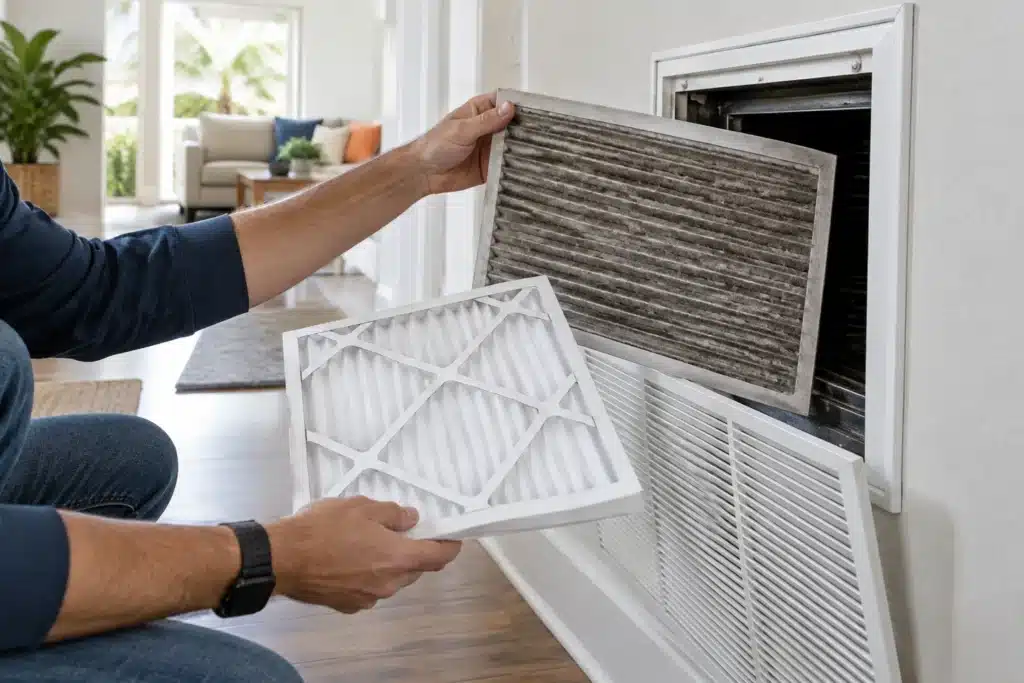
A heavily loaded filter can reduce the volume of warm indoor air reaching the evaporator coil. The correct filter also needs to fit properly and be appropriate for the system. A filter that is too restrictive for the equipment may create an airflow concern even when it looks relatively clean.
Check the filter without opening sealed equipment. If it is dirty, replace it with the correct size and suitable type. A clean filter may solve a limited airflow problem, but it will not correct a dirty coil, blower issue, duct restriction, or refrigerant-related concern.
Blocked Returns Or Closed Supply Vents
Return grilles draw room air back to the equipment, while supply vents deliver conditioned air. Furniture, boxes, curtains, rugs, or remodeling materials can interfere with that path. Closing multiple supply vents in an attempt to redirect cooling can also change system airflow and pressure.
Make sure visible grilles and vents are open and unobstructed. Do not remove grilles, reach into ducts, or enter an unsafe attic. If several rooms have weak airflow, the cause may involve the blower or duct system rather than one blocked opening.
A Dirty Evaporator Coil
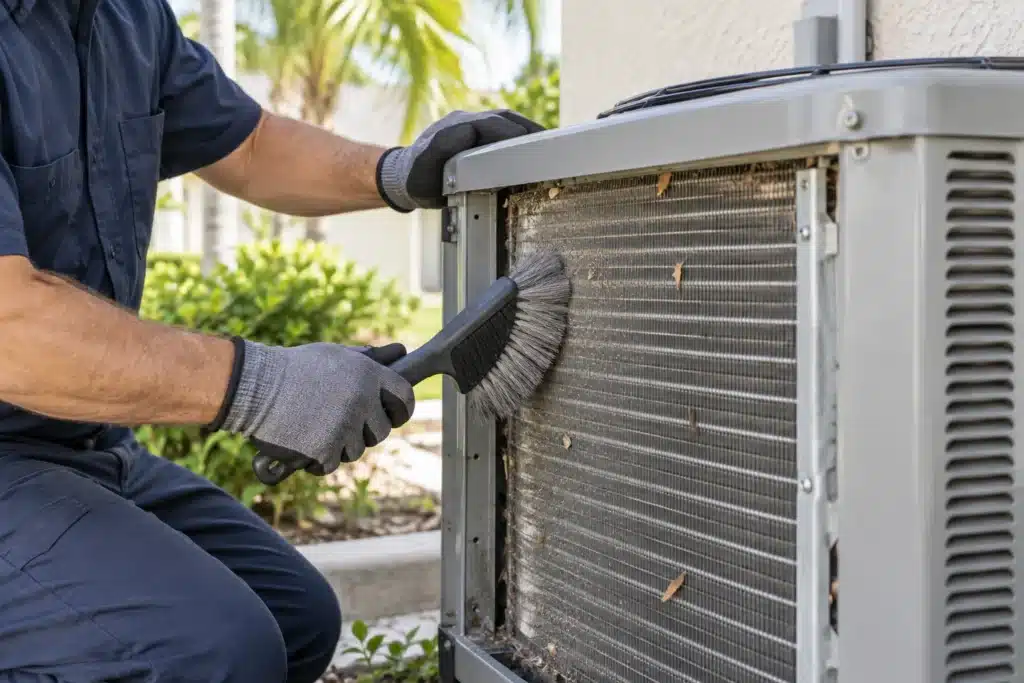
Dust and buildup on the indoor coil can interfere with airflow and heat transfer. The coil is generally located inside the air handler or another equipment cabinet, so this is not a homeowner cleaning task. Opening the cabinet may expose sharp surfaces, electrical components, and parts that require proper handling.
Coil condition is one item a technician may review during preventative AC maintenance. If the coil is already frozen, the technician may need the ice to thaw before a complete inspection can be performed.
Blower Or Air-Distribution Problems
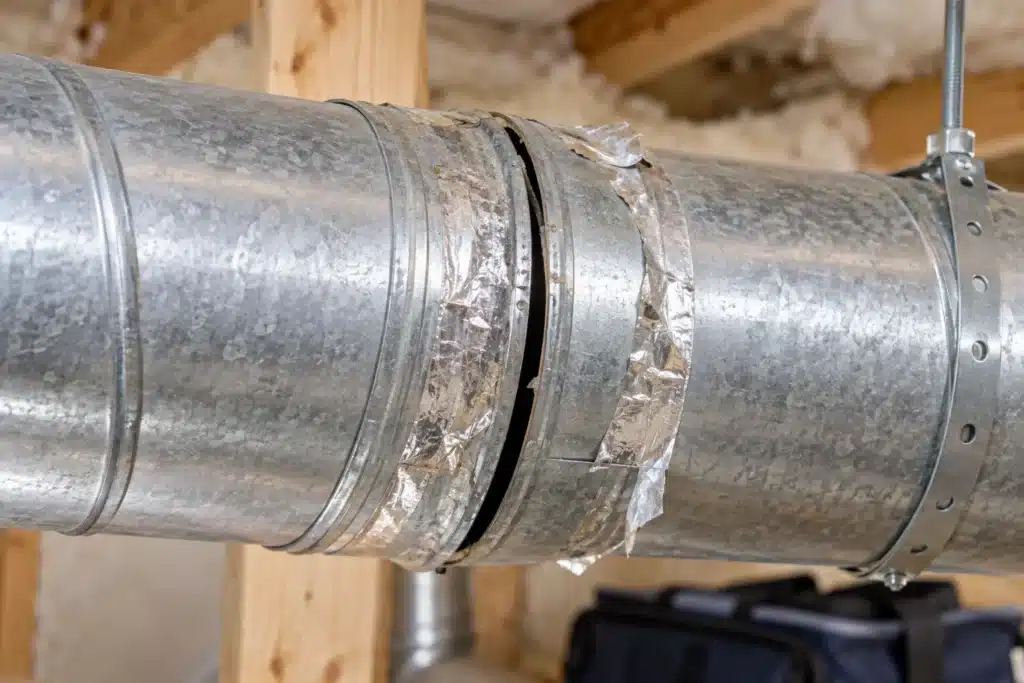
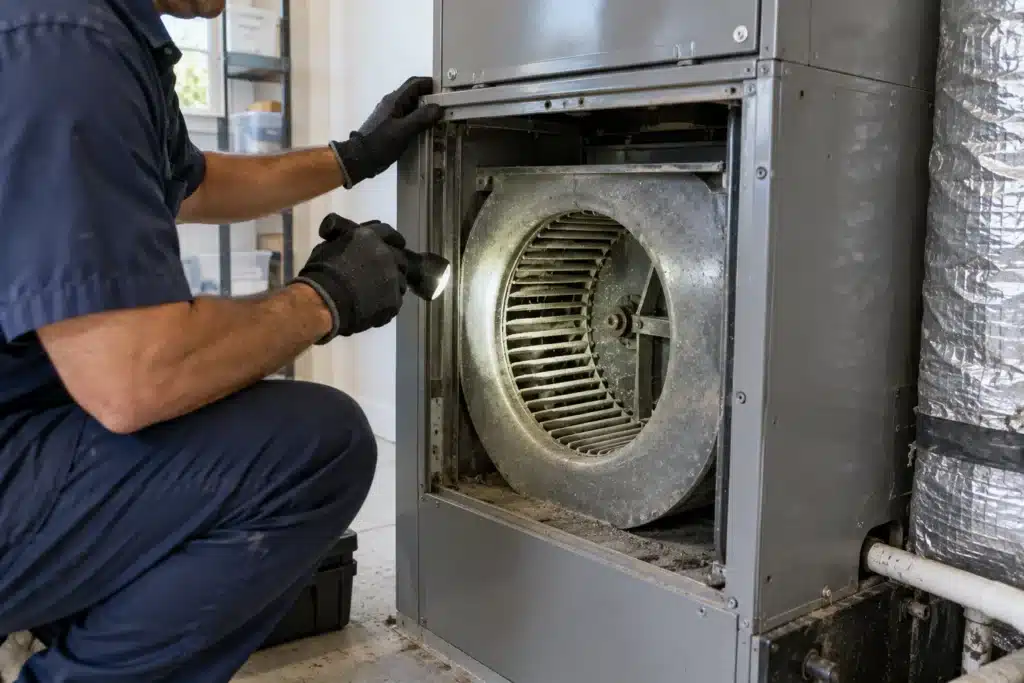
The indoor blower moves air across the coil and through the ducts. A motor, control, wheel, speed, or electrical problem can reduce that airflow. Damaged, disconnected, crushed, or poorly designed ducts can also affect how air returns to and leaves the equipment.
Weak airflow at several vents, unusual blower sounds, or a fan that does not operate normally deserves professional attention. Avoid reaching into the air handler or attempting to test electrical components yourself.
Refrigerant-Related Concerns
Refrigerant moves through a closed circuit and changes pressure as it absorbs and releases heat. A leak, improper charge, restriction, metering-device problem, or another refrigeration issue can cause the evaporator coil to operate under abnormal conditions and freeze.
Refrigerant is not a fuel that should routinely be topped off. If the system is low because of a leak, adding refrigerant without locating and addressing the underlying problem is not a complete repair. Testing, leak diagnosis, and refrigerant handling require the appropriate tools, training, and credentials.
Unusual Operating Conditions
Very low thermostat settings, operating the system when outdoor conditions are unusually cool, or an inaccurate thermostat can contribute to abnormal operation in some systems. These are not the only possible causes, and a thermostat setting alone should not be blamed when ice repeatedly returns.
Freezing may also affect how the system cycles. If frequent starts and stops are part of the problem, note that pattern for the technician. Timing, sounds, thermostat behavior, and whether the indoor fan or outdoor unit stops can all help with the evaluation.
What To Do If You See Ice
Start by turning the thermostat's cooling mode off. Continuing to demand cooling can allow more ice to form and may place additional strain on the system. If the thermostat has a separate fan setting and there is no electrical odor, severe noise, or water near electrical components, setting the fan to on may help move room-temperature air through the system while it thaws. When in doubt, leave the equipment off and call for guidance.
Next, check the air filter and visible vents. Replace a dirty filter with the correct type, and clear ordinary household items away from return grilles and supply vents. Look for water near the indoor equipment as the ice melts. Use towels or a container only when the area is safe and you can do so without touching electrical components or opening equipment.
Thawing can take time, and the absence of ice afterward does not prove that the cause has been corrected. If the system froze heavily, cooling performance remains poor, or the ice returns after restart, leave the cooling off and schedule service. Tell the technician where you saw ice, how long the system had been running, whether airflow changed, and whether water appeared.
What Homeowners Should Not Do
Trying to remove ice quickly can damage the coil, tubing, insulation, drain components, or nearby wiring. Avoid actions that create additional risk.
- Do not chip, scrape, pry, or break ice away from the coil or lines.
- Do not use a hair dryer, heat gun, space heater, open flame, or boiling water.
- Do not open electrical or refrigerant-system panels.
- Do not bypass a float switch, pressure control, breaker, or other safety device.
- Do not add refrigerant or use a do-it-yourself recharge product.
- Do not keep restarting the system when the ice returns.
Turn the equipment off and call promptly if you smell burning, see smoke or sparking, hear severe grinding or buzzing, find water near electrical components, or have a breaker that trips again after a safe single reset. Those conditions require more than a filter check or normal thawing.
What A Professional Evaluation May Include
A technician should identify why the coil froze rather than treating the ice as the entire problem. Depending on the system and symptoms, the evaluation may include:
- Filter size, condition, fit, and airflow restriction
- Return and supply airflow at the equipment and rooms
- Evaporator-coil cleanliness and condition after thawing
- Blower operation, motor performance, wheel condition, and controls
- Visible duct restrictions, disconnected sections, and return-air concerns
- Condensate drainage and signs of water overflow
- Thermostat settings, location, and control operation
- Refrigeration-system operating conditions and signs of leakage or restriction
The appropriate correction depends on what testing finds. One home may need a filter or airflow issue corrected, while another may have a dirty coil, blower problem, duct restriction, or refrigeration concern. A visible layer of ice cannot distinguish among those possibilities.
How To Reduce The Risk Of Another Freeze-Up
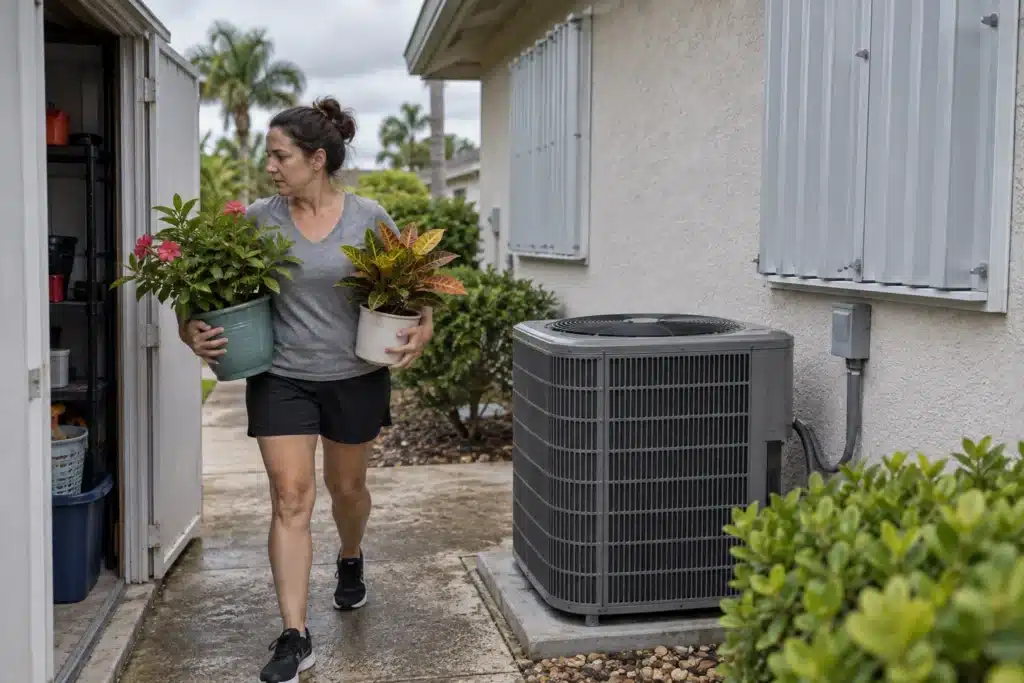
No maintenance plan can prevent every equipment failure, but consistent care can reduce avoidable airflow problems and help identify developing concerns. Check the filter on a schedule that reflects the home, filter type, pets, dust, occupancy, and equipment guidance. Keep returns and vents open, avoid stacking items around indoor equipment, and maintain reasonable clearance around the outdoor unit.
Pay attention to changes before ice becomes visible. Weak airflow, longer run times, warmer rooms, new water near the air handler, or repeated cycling can be early clues. Scheduling service when the pattern begins may make diagnosis easier than waiting until the coil is heavily frozen.
Professional maintenance can review accessible coils, drainage, airflow, electrical components, and system operation. Maintenance does not guarantee that a refrigerant leak or component failure will never occur, but it provides an opportunity to document current condition and address appropriate service needs.
Frequently Asked Questions
Can A Dirty Filter Cause An AC To Freeze?
Yes. A dirty or overly restrictive filter can reduce airflow across the evaporator coil, allowing the coil to become too cold. Replace a dirty filter with the correct size and suitable type. If the ice returns or airflow stays weak, another problem may also be present.
Should I Turn My AC Off If I See Ice?
Yes. Turn the cooling mode off so the system does not continue building ice. Allow it to thaw naturally and watch for water near the indoor unit. If there is an electrical odor, severe noise, or water near electrical components, leave the equipment off and request service promptly.
Can Low Refrigerant Make An AC Freeze?
A refrigerant leak or another refrigeration-system problem can contribute to a frozen evaporator coil. Ice alone does not confirm low refrigerant. A trained technician needs to test the system, identify the underlying condition, and explain the appropriate repair.
How Long Does A Frozen AC Take To Thaw?
Thawing time depends on how much ice has formed, indoor conditions, and whether room-temperature air is moving through the system. It may take several hours. Do not use heat or tools to speed the process. The system should be completely thawed before a technician performs certain checks.
Why Does My AC Keep Freezing After I Change The Filter?
The filter is only one possible cause. A dirty coil, blower problem, blocked return, duct restriction, thermostat issue, refrigerant leak, or another system condition may still be affecting airflow or coil temperature. Repeated freezing needs a professional evaluation.
A frozen air conditioner should not become part of normal summer operation. If you notice signs of AC Freezing Up in Loxahatchee, Palm Beach County, or a nearby South Florida community, call Tri-County HVAC at (561) 281-8074 or use the online contact page to request service.