You reach the filter aisle knowing your AC needs a replacement, then face a wall of sizes, ratings, and claims. One package promises better particle capture. Another looks almost identical to the filter at home. Which details actually matter?
The right choice starts with your particular system: the required dimensions, the filter housing, and the filtration level it can accommodate. Price and packaging cannot establish compatibility. A replacement should fit correctly and support the system's airflow.
This guide to AC filters in Loxahatchee helps homeowners make a clearer buying decision. It covers size labels, filter depth, MERV ratings, and questions to ask before upgrading. In Palm Beach County, where cooling can continue well into fall, October is still a useful time to review the filter you are using.
Table of Contents
Start with Your System's Filter Requirements
Before ordering a multipack, collect the information you already have. Look for a previous service recommendation, the filter cabinet's product information, or a record of the correctly specified replacement. A clear photo of that information can help when you shop.
The filter currently installed is a useful clue, but it is not always proof of the correct choice. A previous owner or resident may have bought whatever was available. If the frame is bent, loose, or squeezed into place, ask the technician to confirm the specification before repeating that purchase.
Keep each system separate in your notes. A home with two air handlers may use different filters. Several return grilles may also need different sizes. Label your shopping record by the actual location so a spare for one opening does not get used in another.
If you rent, check who handles filter selection and replacement. Share a photo or the existing maintenance instructions with the property manager before changing the specified type. That keeps the equipment's care consistent and avoids conflicting recommendations.
Check Nominal and Actual Filter Size
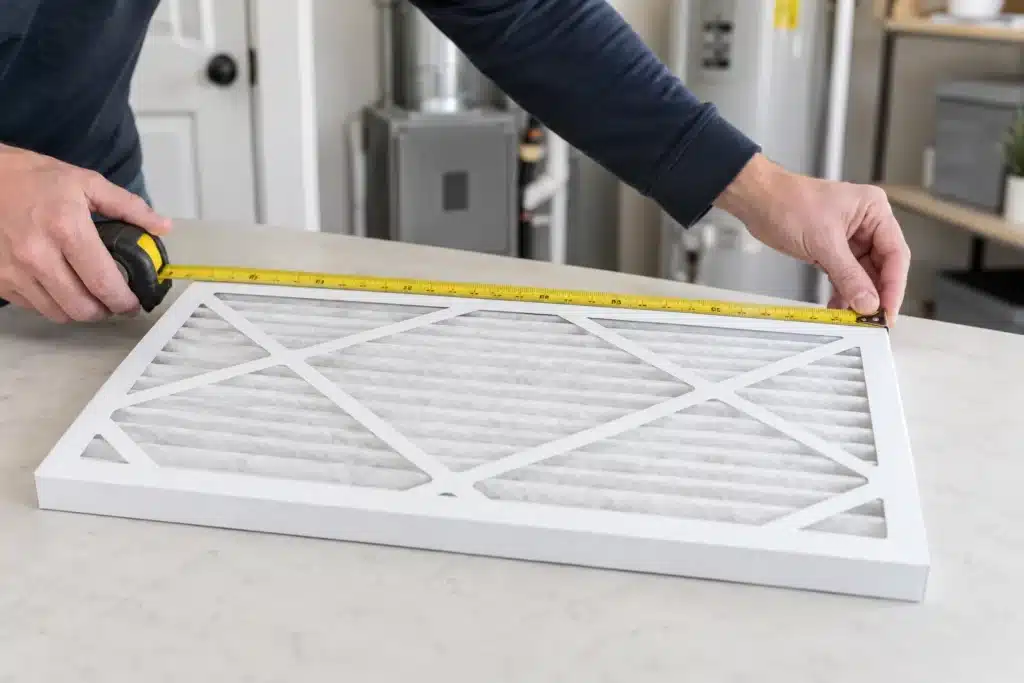
A filter's printed size may not be its exact measured dimensions. Trane's filter guidance distinguishes the nominal size, a rounded buying label, from the actual size, the physical measurement.
For example, a package may use a whole-number size label while its actual dimensions are slightly smaller. That difference can be intentional. It should not lead you to round an unknown opening yourself and assume any nearby size will fit.
Record all three dimensions
Length, width, and depth belong together in the shopping record. Check the product's actual dimensions when comparing replacements, especially if changing brands or ordering an unfamiliar product online.
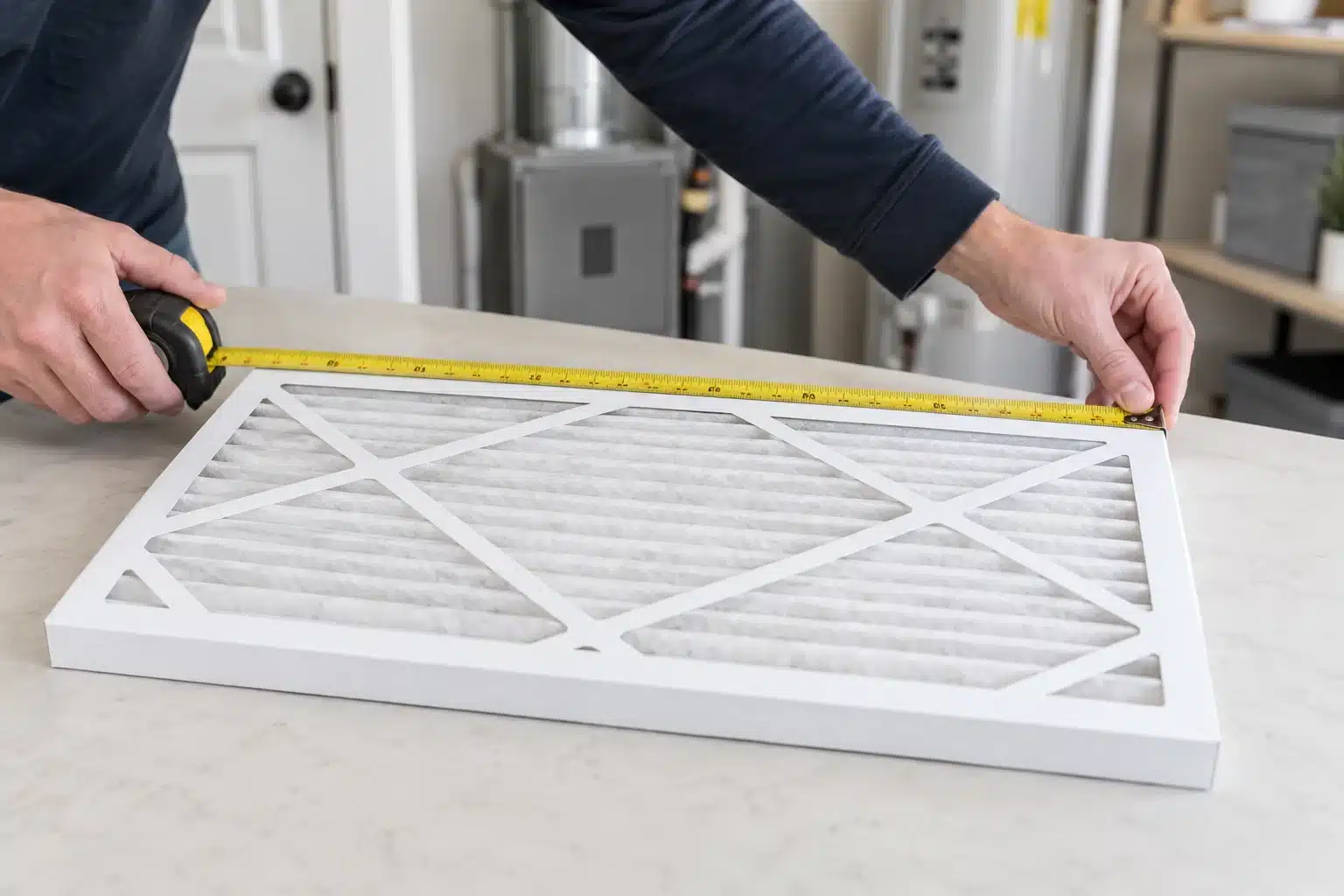
If the existing filter is safely removable under the equipment's instructions, measuring its outer frame can help you verify the listing. Measure the frame rather than only the pleated material. Treat that measurement as supporting information, then confirm it against the housing's requirements.
Do not force a near match
A replacement should sit properly without being crushed or leaving obvious spaces around it. The EPA's home air-cleaner guide emphasizes a snug fit that avoids air bypass and does not require bending the filter.
If you cannot identify a correct replacement, keep the package unopened and ask for help. Do not cut down a standard filter or improvise packing around a loose frame. A compatible replacement is easier to maintain consistently than a makeshift fit.
Why Filter Depth Deserves Its Own Check
Two filters can look similar from the front and be very different from the side. A shallow filter and a deeper media filter require compatible housings. Matching only the face dimensions leaves an important part of the selection unresolved.
Filter depth and filtration rating describe different things. Depth is a physical dimension. MERV describes tested particle capture. Do not treat a thick frame as proof of a particular rating or assume a filter's rating tells you how deep it is.
When a technician recommends a different filter format, ask whether the existing cabinet accepts it. If a cabinet change is needed, request the proposed scope and cost before buying replacements. A filter recommendation and a housing modification are separate decisions.
For a simple shopping check, hold the current product information beside the proposed listing and compare all three dimensions. If the depth differs, pause. The product may belong to a different installation even when the front looks familiar.
Understand What MERV Tells You
MERV stands for Minimum Efficiency Reporting Value. It describes a filter's ability to capture particles in specified size ranges under a standardized test. A higher rating generally means better capture of the particle sizes covered by that test.
EPA's explanation of MERV recommends MERV 13, or the highest rating the system fan and filter slot can accommodate, when upgrading filtration. That compatibility condition matters as much as the number.
MERV is not a star rating for the entire AC system. It does not establish that a product fits your cabinet, guarantees a cleaner home, or will solve a comfort complaint. You still need to match the filter to its intended installation and maintain it.
You may also see proprietary ratings such as MPR or FPR on packaging. These are different rating systems. Do not compare their numbers directly with a MERV number. Look for the manufacturer's published MERV information or ask for help comparing the products.
A useful question at the service visit is: “Which MERV level and filter type do you recommend for this system, and which compatible replacement should I buy?” Request a specific answer you can keep with your shopping record.
Confirm Airflow Compatibility Before Upgrading
A filter change can affect resistance to airflow. The system needs to accommodate the selected product, not just its printed efficiency rating. EPA's technical review of residential air cleaners explains that higher-efficiency filtration must be evaluated for compatibility with the existing HVAC system.
This does not mean a higher-rated filter is automatically unsuitable. It means the recommendation should account for the particular equipment and air path. Ask the technician what supports the proposed choice and whether further evaluation or a cabinet change is needed.
Explain why you want to upgrade. You may be comparing particle filtration options, following a previous recommendation, or replacing an unavailable product. A clear goal helps the technician address the actual question rather than recommending a product without context.
If you notice weaker airflow, a new noise, or cooling changes after switching products, keep the packaging and tell the service team exactly what changed. The timing is useful information, but it does not prove the filter is the only cause. Do not keep buying different ratings to troubleshoot an unresolved system problem.
Once the specification is confirmed, save it somewhere easy to use at the store or on your phone. A short record reduces repeat guesswork and helps everyone caring for the home buy the same compatible product.
Include:
- The system or filter location, such as the hallway return or upstairs unit.
- The recommended product type and nominal dimensions.
- The actual dimensions when relevant to fit.
- The confirmed MERV rating or acceptable product options.
- A photo of the product information and any service recommendation.
- The installation date and recommended inspection or replacement guidance.
Before buying a bulk pack, verify one replacement fits correctly and is the recommended type. Keep the receipt and avoid opening every package until the match is confirmed. If a familiar product is discontinued, use the saved specification to evaluate its replacement.
Review an online listing rather than relying only on the product photo. Similar images may be used for several sizes. Check the selected variation, quantity, dimensions, and rating before completing the order.
Check Fit and Airflow Direction During Replacement
Follow the equipment manufacturer's instructions and use only the designated, safely accessible filter opening. Turn off power as directed before starting. Leave attic access, electrical panels, and unfamiliar equipment compartments to a professional.
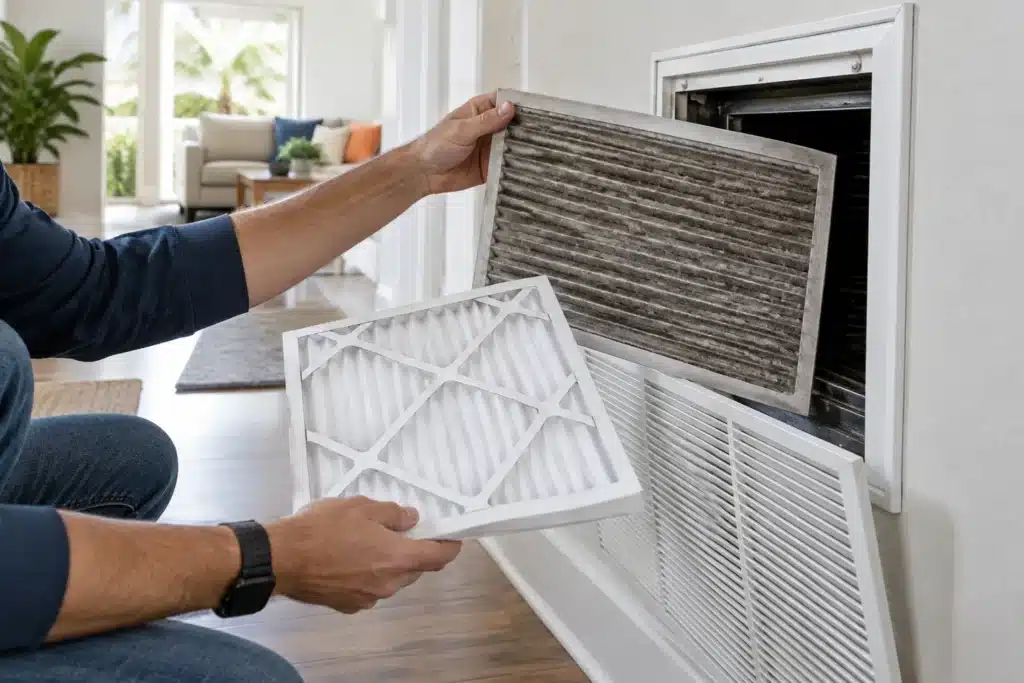
Carrier's replacement guide explains that the filter's airflow arrow should point in the direction air travels toward the blower. Do not choose the direction based only on which side looks cleaner or faces the room.
Seat the correct replacement without crushing the frame, then secure the designated cover or grille according to the instructions. If you are uncertain about the direction, access point, or fit, stop and ask the technician to show you.
Do not add another filter simply because there is a second opening that appears to accept one. Ask which locations are intended to contain filters in your installation. The technician can explain the arrangement without leaving you to guess.
Set a Replacement Routine for Your Home
A package's suggested interval is a starting point to discuss, not a reason to ignore the filter's condition. Follow the equipment and filter instructions, then ask whether your home's usage calls for more frequent checks.
In South Florida, cooling demand can continue after summer ends. Keep your reminder active through fall rather than assuming a calendar change means the AC has stopped working. Use the actual installation date when setting the next reminder.
Record what you find during checks and share unusual changes with the service team. If a filter becomes heavily loaded much sooner than expected, ask about the pattern rather than automatically moving to a different rating.
Check whether your product is disposable or specifically designed for cleaning. Do not wash a disposable pleated filter to extend its life. Use the maintenance procedure for the actual product, and replace it when directed.
Know What a Filter Change Cannot Solve
A correctly selected filter is part of HVAC care, but it cannot resolve every indoor-air or cooling issue. Ordinary particle filtration does not remove all pollutants, and a higher rating does not fix the source of a moisture problem.
If the home remains uncomfortable after a correct replacement, describe the remaining symptoms. Tri-County's guide to airflow problems and hot rooms explains why other parts of the system or building may need attention.
For a broader concern about indoor conditions, ask about indoor air quality services. Be specific about what you have observed. A filter purchase should not become a substitute for evaluating an unresolved complaint.
Get Help Choosing a Compatible Filter
Tri-County HVAC offers indoor air quality services and preventative AC maintenance for homeowners in Loxahatchee, Palm Beach County, and surrounding service areas. Share your current filter information and ask whether the size and type suit your system.
Call (561) 281-8074, contact the team, or request a service appointment online. Mention any current cooling problem when booking so the team can discuss the appropriate visit.
Frequently Asked Questions
Can two filters with the same printed size fit differently?
They can have different actual measurements. Compare the product information with your confirmed requirements rather than assuming the rounded size label establishes the fit.
Should I always buy the highest MERV rating?
Choose the highest appropriate rating your system can accommodate. Confirm compatibility with the equipment instructions or an HVAC professional before upgrading.
Can I replace a shallow filter with a deeper one?
Only if the housing and system are designed to accept that product. Ask about compatibility and any required cabinet work before making the change.
Does a higher-rated filter remove humidity?
No. A particle filter is not a dehumidifier. Persistent moisture or comfort concerns need their own evaluation.
What should I bring to an appointment about filter selection?
Have the existing product information, prior recommendations, installation date, and details of any recent change available. Photos can help explain the fit or label without opening unfamiliar equipment.
Make the Next Purchase Easier
Choosing AC filters becomes simpler when the specification is clear. Confirm the size, depth, rating, and maintenance instructions for your system, then keep that information handy. The next trip to the filter aisle can start with a verified match instead of a guess.