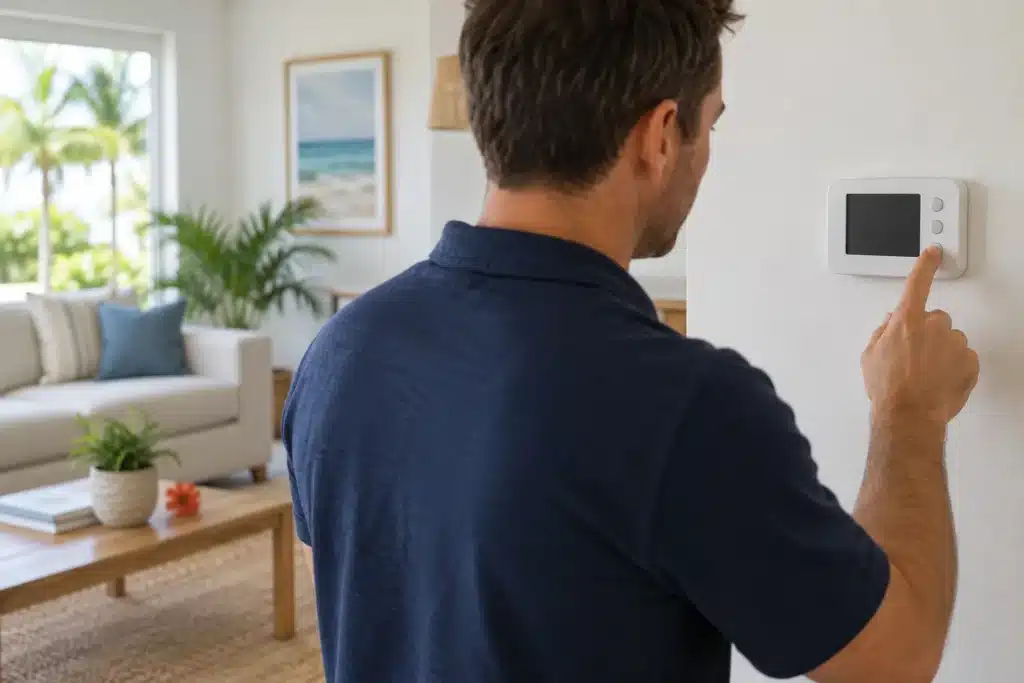
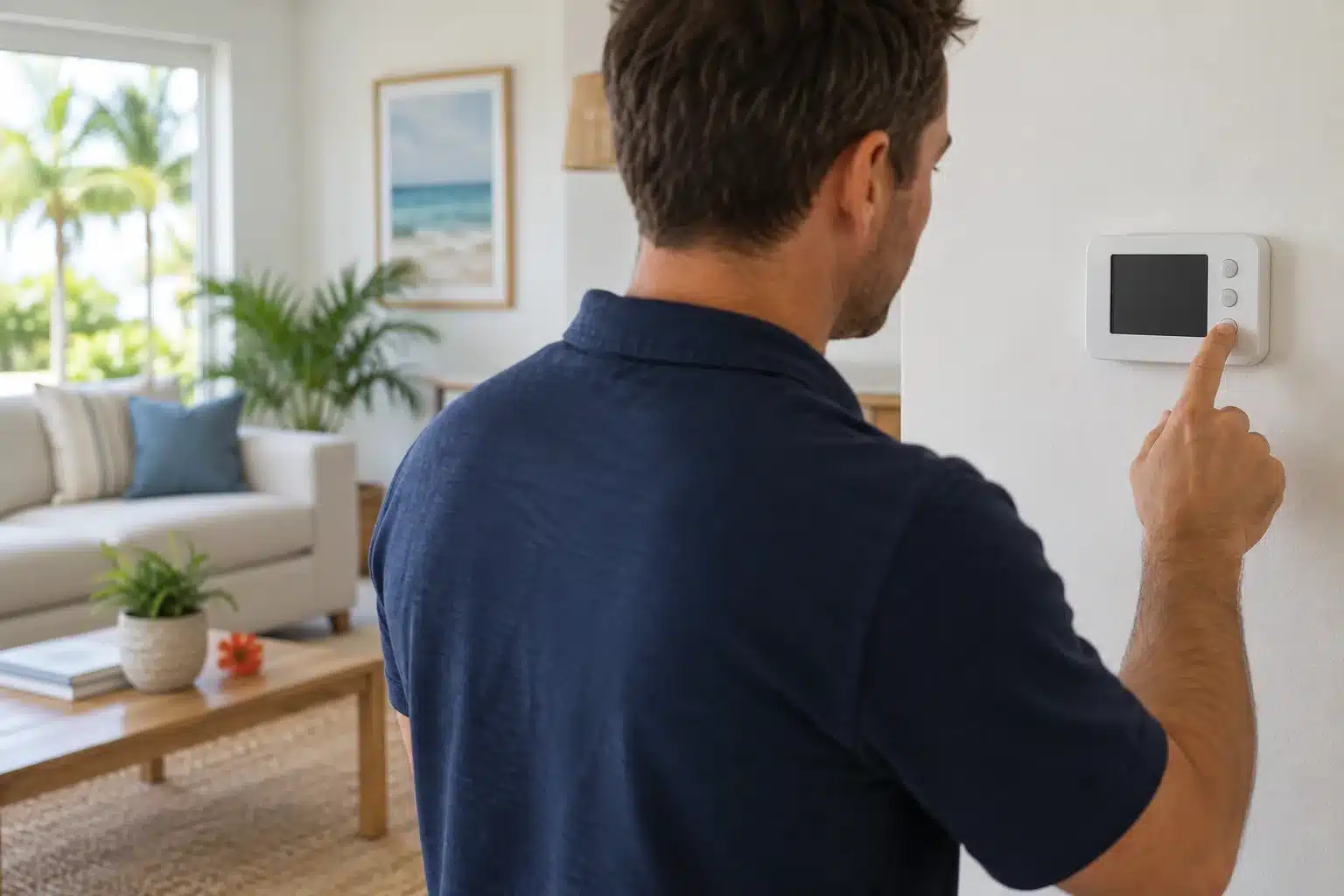
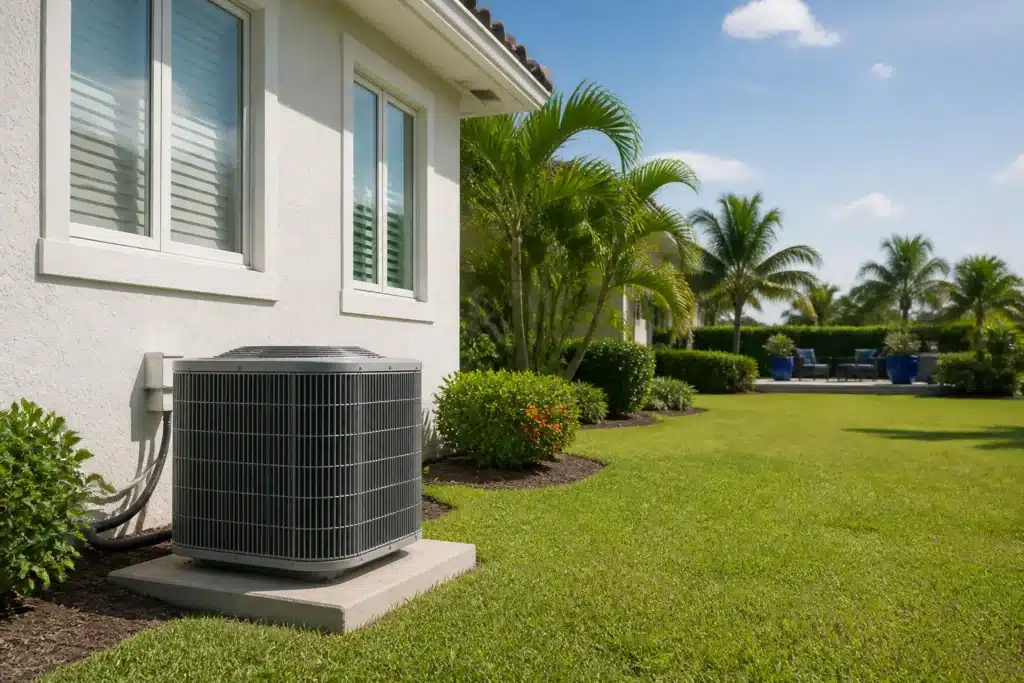
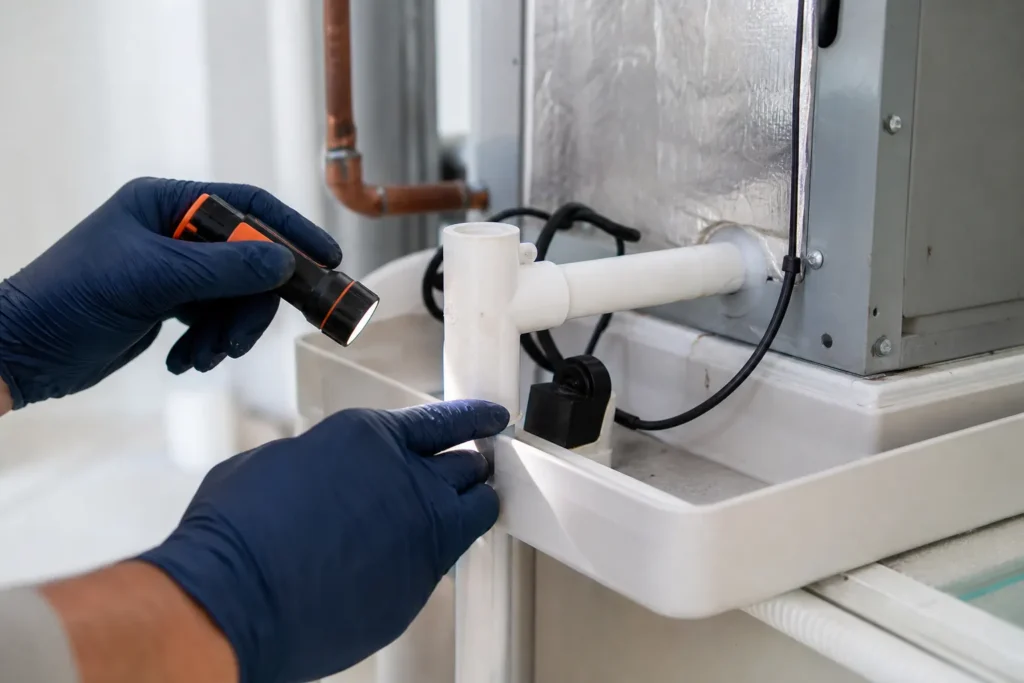
Thermostat Repair may sound like a simple wall-control problem, but the thermostat is only one part of the cooling system. When the screen goes blank, the temperature reading seems wrong, or the AC does not respond, the cause could be batteries or settings. It could also involve wiring, a drain safety switch, power to the indoor unit, or the air conditioner itself.
That distinction matters in South Florida, where a cooling interruption can make a home uncomfortable quickly. Replacing the thermostat without checking the rest of the system may leave the real problem unresolved. At the same time, homeowners can make several safe observations before requesting service.
This guide explains common thermostat symptoms, what you can check without opening wiring, and how a technician determines whether the thermostat or another HVAC component needs attention.
Table Of Contents
Quick Answer: When Is Thermostat Repair Needed?
Thermostat Repair or replacement may be needed if the control has power but does not respond, reads the room temperature incorrectly, loses settings, sends inconsistent calls to the AC, or continues to malfunction after fresh batteries and correct settings are confirmed. Those symptoms do not prove that the wall control is faulty.
A blank screen can result from dead batteries, but it can also appear when the indoor unit loses power or a safety switch shuts the system down. An AC that will not start may have a thermostat issue, an electrical problem, a failed component, or a built-in time delay. Short cycling can involve controls, airflow, a frozen coil, or other equipment conditions.
Begin with basic observations. If the screen stays blank, a breaker trips repeatedly, wiring appears damaged, or the AC still does not respond, request professional AC repair rather than replacing parts by guesswork.
How The Thermostat Controls Your AC
The thermostat measures temperature near its location and compares that reading with the selected setting. When cooling is needed, it sends a low-voltage signal to the HVAC system. The indoor blower, outdoor equipment, controls, and safety devices must then complete the proper sequence for cooling to begin.
This is why a thermostat can look normal while the system does not cool. The thermostat may be making the correct call, but a control board, safety switch, motor, capacitor, contactor, drain condition, or refrigeration problem may prevent operation. The reverse is also possible: the AC equipment may be ready, but the thermostat or its wiring may not send a reliable signal.
Many thermostats also include schedules, temporary holds, fan settings, humidity functions, Wi-Fi connections, and equipment-protection delays. A misunderstood setting can look like a failure. Before changing hardware, review the screen and the owner's manual for the specific model.
Signs You May Need Thermostat Repair
Thermostat symptoms often overlap with larger AC problems. Note exactly what the control displays and how the equipment responds.
The Screen Is Blank Or Unresponsive
If the thermostat uses replaceable batteries, dead batteries are the simplest possibility. A hardwired thermostat may go blank when the HVAC system loses power, a low-voltage fuse opens, wiring fails, a transformer has a problem, or a condensate safety switch interrupts operation.
Replace homeowner-accessible batteries according to the manual. If the display remains blank, avoid removing wires or opening the air handler. The loss of thermostat power may be a symptom of another problem.
The Displayed Temperature Seems Wrong
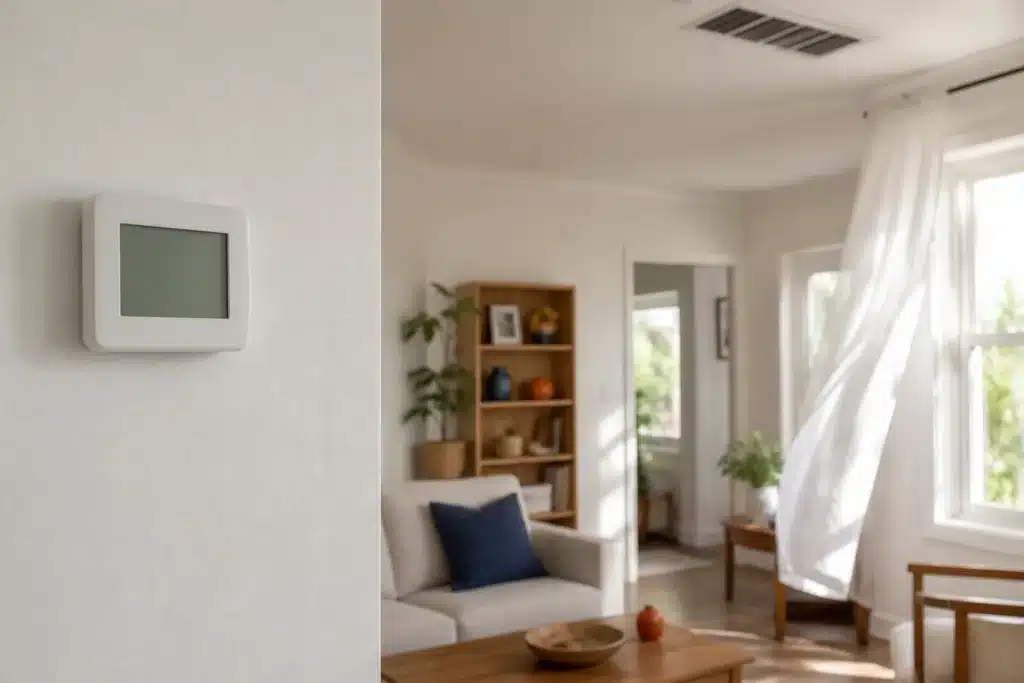
Direct sunlight, heat from a nearby lamp or television, air from a supply vent, an exterior-wall location, or an internal sensor problem can affect the reading. Compare the thermostat with a reliable room thermometer placed nearby but away from direct sun or supply airflow. Allow time for the readings to stabilize.
A small difference does not always mean failure because sensors and display rounding vary. A large or changing difference deserves evaluation, especially when the home is uncomfortable.
The AC Does Not Respond To A Cooling Call
Confirm that the thermostat is set to cooling and the selected temperature is below the displayed room temperature. Some controls intentionally delay startup for several minutes to protect the compressor. A flashing cooling message may indicate that delay rather than a defect.
If the delay continues, the thermostat may not be sending the call, or the system may not be able to respond. Do not rapidly change settings or keep switching power on and off. Note whether the indoor blower or outdoor unit starts and share that information with the technician.
The System Starts And Stops Too Often
Frequent short cycles may be associated with thermostat placement, loose wiring, incorrect setup, or a control problem. They may also result from restricted airflow, frozen components, equipment sizing, or another AC condition. Tri-County HVAC's guide to AC short cycling explains why the entire system should be checked.
The AC Keeps Running Past The Setting
A thermostat with an inaccurate sensor or control problem may fail to end the cooling call. However, warm rooms, weak airflow, duct losses, low cooling capacity, or a system problem can also keep the equipment running because the selected temperature is never reached.
Switch the thermostat to off. If the cooling equipment continues operating, request service. Do not open panels or disconnect thermostat wires.
Schedules Or Settings Keep Changing
A programmed schedule, temporary hold, vacation mode, app setting, utility program, or another authorized user may change the temperature. Power interruptions can also affect some controls. Review the schedule and account access before assuming the thermostat has failed.
If settings disappear repeatedly, the screen freezes, or the thermostat restarts without explanation, document the behavior. A technician can check power, wiring, configuration, and compatibility.
When The Problem May Be Somewhere Else
The thermostat is visible, so it often gets blamed first. Several HVAC conditions can create the same symptoms:
- A clogged condensate drain may activate a safety switch and stop cooling.
- A dirty or overly restrictive filter may reduce airflow and contribute to freezing or short cycling.
- A tripped breaker, service switch, blown low-voltage fuse, or power problem may interrupt operation.
- A failed capacitor, contactor, motor, control board, or other electrical component may prevent startup.
- Ice, a refrigeration problem, dirty coils, or poor airflow may keep the home from reaching the setting.
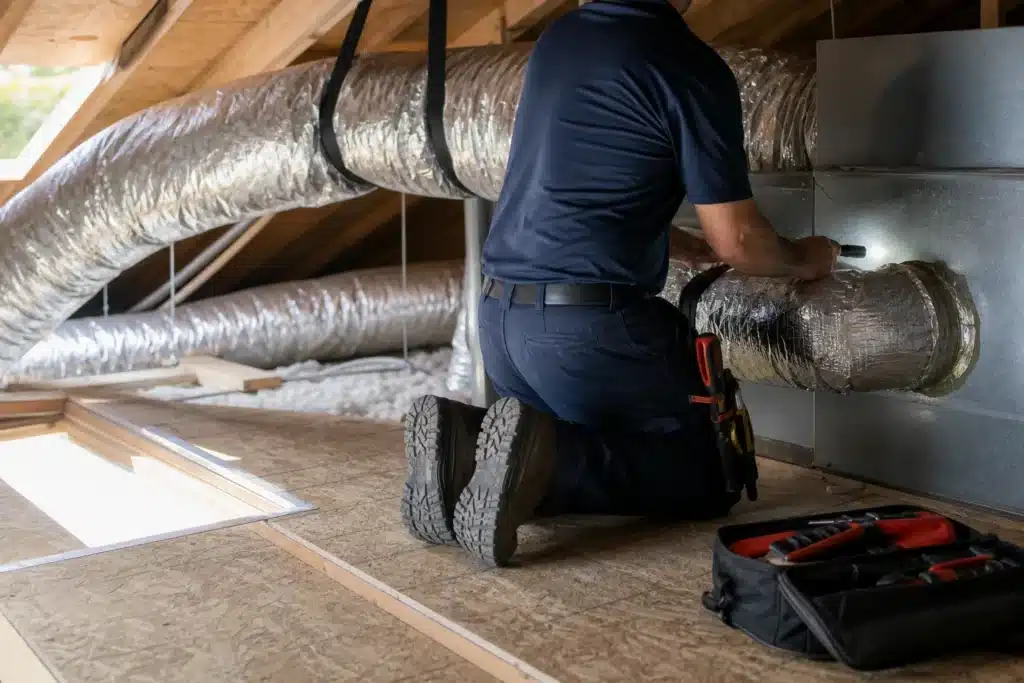
- Duct leakage or damaged ductwork may create room temperatures that do not match the thermostat area.
If the thermostat shows a normal cooling call but the vents blow warm air or no air, review the guide to an AC running but not cooling. The thermostat may be doing its job while another part of the system needs service.
Safe Thermostat Checks For Homeowners
You can complete these checks without handling wires or opening HVAC equipment:
- Confirm the thermostat is set to cooling, not heating, off, or fan-only mode.
- Set the cooling temperature below the displayed room temperature and wait through any normal protection delay.
- Replace batteries if the model uses them, following the owner's manual and battery orientation.
- Review active schedules, holds, vacation modes, app commands, and displayed alerts.
- Make sure the thermostat is not being heated by direct sun, a lamp, electronics, or nearby cooking.
- Check the accessible air filter and verify that supply vents and return grilles are open and clear.
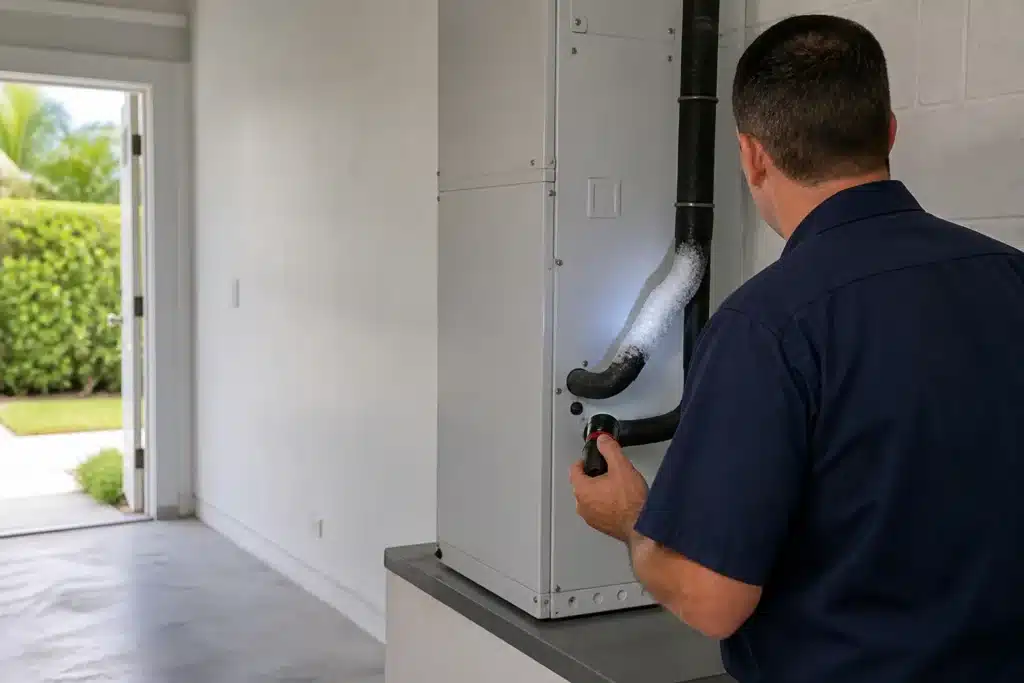
- Look for visible water near the indoor unit without removing panels or bypassing a safety switch.
- Check the labeled HVAC breaker. If it has tripped, reset it no more than once. Call for service if it trips again.
Stop if you see frayed wiring, smell burning, hear electrical buzzing, find water near electrical parts, or notice smoke or sparks. Do not pull the thermostat from the wall, move wires, bypass controls, or install a replacement unless you understand the system's wiring and compatibility requirements.
South Florida Conditions That Can Affect The Diagnosis
Cooling systems in Loxahatchee and Palm Beach County operate through long periods of heat and humidity. Because the AC removes moisture while it cools, condensate drainage is especially important. A drain backup may shut the system down through a float switch, leaving the thermostat blank or showing a cooling call that the equipment cannot complete.
Brief power interruptions and voltage changes during storms may reset a thermostat, erase a temporary setting, or place equipment into a protective delay. Wait for the normal delay and follow the model's instructions. Repeated resets or breaker trips are not normal and need professional attention.
Placement also matters in bright Florida homes. Afternoon sun on the thermostat can make its location feel warmer than the rest of the house. A nearby supply vent may make it read cooler. The best correction depends on the control, wiring, wall location, and how air moves through the home.
What A Professional Evaluation May Include
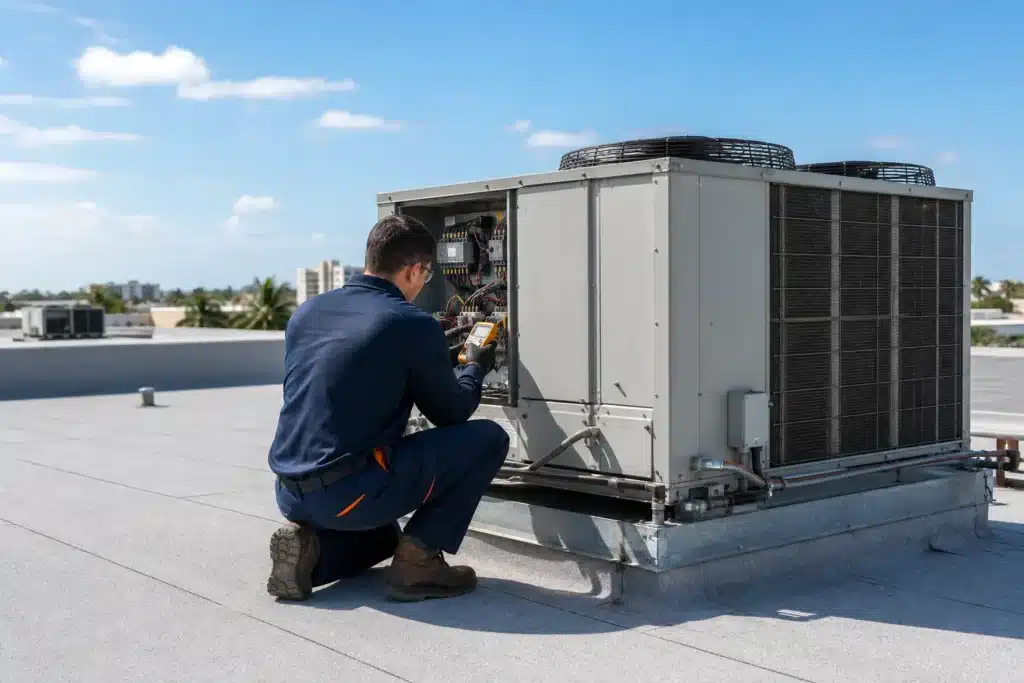
A technician should determine whether the thermostat is sending the correct call before recommending replacement. Depending on the symptoms and equipment, the visit may include:
- Reviewing thermostat mode, schedule, configuration, error history, and equipment setup
- Comparing the displayed temperature and humidity with reliable instruments
- Checking thermostat power, low-voltage wiring, terminals, and communication
- Testing the cooling call, fan call, control board, relays, and safety circuit
- Inspecting the condensate drain and float switches
- Checking airflow, filter condition, indoor and outdoor operation, and system temperatures
- Confirming whether the thermostat is compatible with the HVAC equipment and available wiring
The findings should explain which part stopped the cooling sequence and why. That prevents a working thermostat from being replaced when the real cause is a drain, wiring, airflow, electrical, or equipment problem.
Thermostat Repair Or Replacement?
Some thermostat problems are corrected with batteries, configuration, a wiring repair, proper mounting, or restoration of power from the HVAC system. Replacement may make more sense when the control has a damaged or failing display, unreliable sensors, repeated internal faults, obsolete technology, or compatibility limitations.
Do not select a replacement by appearance alone. Conventional AC systems, heat pumps, multistage equipment, variable-speed systems, and communicating systems may require different controls. Wiring, power requirements, humidity functions, accessories, and manufacturer-specific communication can all affect compatibility.
A smart thermostat can add scheduling and remote-control features, but it will not repair poor airflow, a clogged drain, damaged ductwork, or failing AC equipment. Choose features that fit the household and make sure the control can operate the complete system correctly.
How To Reduce Future Thermostat Problems
Keep the area around the thermostat open to normal room air. Avoid placing lamps, televisions, or other heat-producing items directly beside it. Review schedules after a power interruption or app update, replace batteries when the model indicates they are low, and keep account access current for connected controls.
Regular AC maintenance can also identify drainage, airflow, electrical, and equipment conditions that may look like thermostat trouble. Mention intermittent screens, unexplained resets, changing readings, or delayed responses even if the problem is not happening during the visit.
Frequently Asked Questions
Why Is My Thermostat Screen Blank?
The thermostat may need new batteries, or it may have lost power from the HVAC system. A tripped breaker, wiring problem, low-voltage issue, equipment switch, or condensate safety switch may be involved. If fresh batteries do not restore the display, request service.
Why Does The Thermostat Say Cooling But The AC Is Not On?
A brief compressor-protection delay may be normal. If the wait continues, the thermostat, wiring, safety circuit, indoor unit, outdoor unit, or another component may not be completing the cooling sequence. Avoid repeated resets and have the system checked.
Can A Bad Thermostat Cause Short Cycling?
It can contribute if its sensor, location, wiring, setup, or control operation is faulty. Short cycling may also come from airflow, freezing, sizing, or equipment problems, so the cycling pattern should be diagnosed before the thermostat is replaced.
Can I Replace My Thermostat Myself?
Some basic systems appear simple, but incorrect wiring or an incompatible control can prevent operation or damage equipment. Communicating, multistage, heat-pump, variable-speed, and accessory-equipped systems need particular care. Professional installation is the safer choice when compatibility or wiring is uncertain.
Does A Smart Thermostat Fix High Cooling Bills?
A smart thermostat can make schedules and temperature adjustments easier, but it does not guarantee savings and cannot correct mechanical, airflow, duct, or installation problems. Comfort habits, weather, equipment condition, and the home itself all affect energy use.
A thermostat problem does not always end with a new wall control. Tri-County HVAC can trace the cooling call, check the connected equipment, and explain whether Thermostat Repair, replacement, or another AC service is appropriate. Call (561) 281-8074 or use the online contact page to request service in Loxahatchee, Palm Beach County, or a nearby South Florida community.